Knowing how to clean kitchen cabinets correctly is the difference between a kitchen that looks maintained and one that looks neglected, regardless of how new or expensive the cabinets are. To clean kitchen cabinets safely, start with a soft, dry wipe, then use a damp microfiber cloth with a small amount of mild dish soap for everyday grease. The best cleaning routine for a premium kitchen is not aggressive because it is frequent, gentle, and matched to the cabinet material and finish. The wrong cleaning method can strip finishes, raise wood grain, or leave a hazy film that attracts more grime. The right method takes less time and produces better results.
Kitchen cabinets see everything. Cooking grease, food splatters, fingerprints, dust, steam every meal leaves a trace. Unlike countertops and appliances, cabinets are easy to overlook until the buildup becomes visible, sticky, and stubborn. You can learn how to clean kitchen cabinets by material type, how to remove greasy kitchen cabinet buildup, and how to degrease kitchen cabinets for painting. Kitchen Remodel Bellevue WA offers professional kitchen cabinet customization, handling everything from cabinet selection through final installation.
Cabinets Beyond Cleaning? We Restore or Repaint Them.
When cleaning is no longer enough, Kitchen Remodel Bellevue WA offers professional cabinet repainting and refinishing.
Get a Cabinet Assessment Call (425) 696-7060Table of Contents
Why Do Kitchen Cabinets Get So Dirty?
Kitchen cabinets get so dirty because airborne cooking steam, grease, and everyday handling form a sticky film that traps household dirt and dust. Understanding why they get dirty so fast is helpful before learning how to clean kitchen cabinets. Greasy cabinets are basically inevitable, especially the upper ones, no matter how fastidious you are when it comes to keeping a clean kitchen.
Seeking a place to settle, oily droplets collect on your kitchen cabinets over time, coating them in a greasy film. Touching these cabinets while you cook could contaminate your food, meaning keeping them clean is a matter of health as well as aesthetics. The worst area is always near the stove and range.
Every time you fry, sauté, or boil, microscopic oil particles become airborne and settle on every surface in range, including cabinet fronts, door edges, and hardware. Over time, this invisible film becomes a sticky layer that traps dust, pet hair, and cooking residue. Understanding this makes the cleaning approach clearer: the goal is not just surface wiping; it is cutting through the oil film that has bonded to the cabinet finish.
What You Need to Clean Kitchen Cabinets
The best way to clean kitchen cabinets does not require specialty products. While stores sell numerous specialty cabinet cleaners, professional cleaners rely on three simple household items to remove kitchen grime. Here is the complete supply list. Here is what you need before learning how to clean kitchen cabinets.
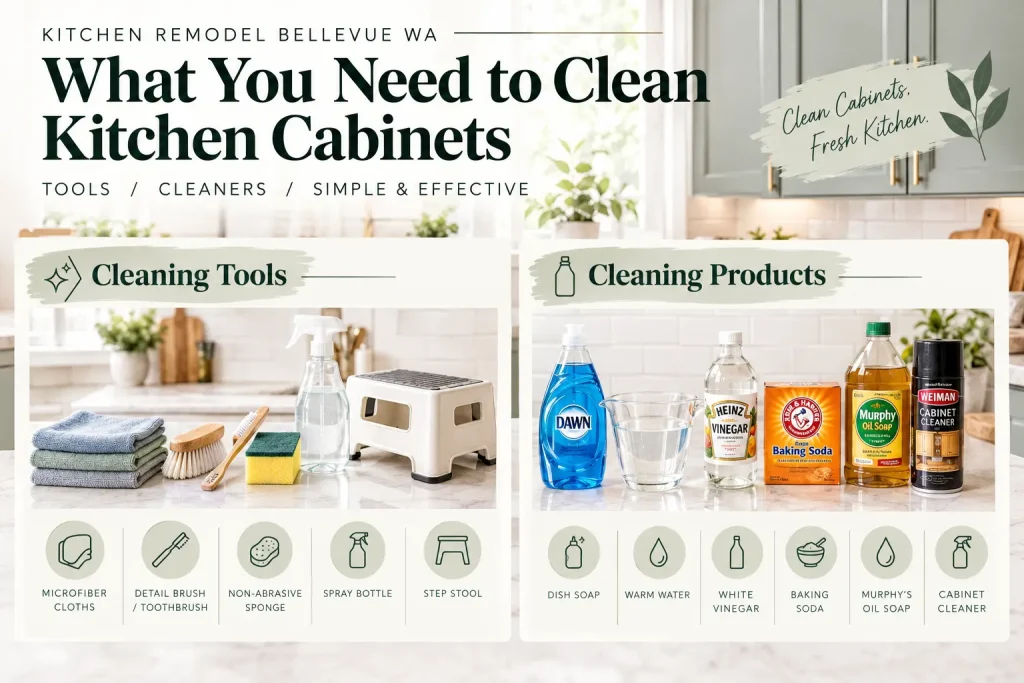
Cabinet Cleaning Tools
Here are the tools you need to clean the kitchen cabinetry:
- Microfiber cloths, at least three (apply, rinse, dry)
- Soft-bristled detail brush or old toothbrush for hardware and corners
- Non-abrasive sponge for moderate buildup
- Spray bottle for diluted cleaning solutions
- Step stool for top of upper cabinets
Kitchen Cabinet Cleaning Products
The following products are required for cleaning the kitchen cabinets:
- Mild dish soap like Dawn, Method, or any pH-neutral dish soap
- Warm water, not hot, which can soften paint and finishes
- White vinegar, diluted, for cutting grease
- Baking soda in paste form for stubborn stains
- Murphy’s Oil Soap, diluted, for wood cabinets
- Commercial cabinet cleaner like Pledge, Weiman, Parker Bailey
What Not to Use:
You should avoid using the following products during cabinet cleaning:
- Abrasive scrubbing pads can scratch and dull finishes.
- Bleach-based cleaners may damage kitchen cabinet paint colors and wood.
- Ammonia-based cleaners (Windex) often strip finishes over time.
- Magic Eraser is abrasive at a microscopic level and removes paint sheen.
- Undiluted vinegar is too acidic for regular use on cabinet finishes.
- Steam cleaners can damage adhesion and finishes because heat and moisture can weaken them.
Not Sure If Your Cabinets Need Cleaning or Repainting?
We offer in-home cabinet assessments and tell you honestly whether cleaning, touch-up, or a full repaint is the right solution for your specific cabinets.
Book a Consultation Call (425) 696-7060What is the Best Way to Clean Kitchen Cabinets?
The best way to clean greasy cabinets is to scrub them with a soft rag or non-abrasive sponge and a mixture of Dawn dish soap and warm water. It is important to wipe away any residue with a clean, damp sponge. Here is the complete step-by-step process for how to clean kitchen cabinets.
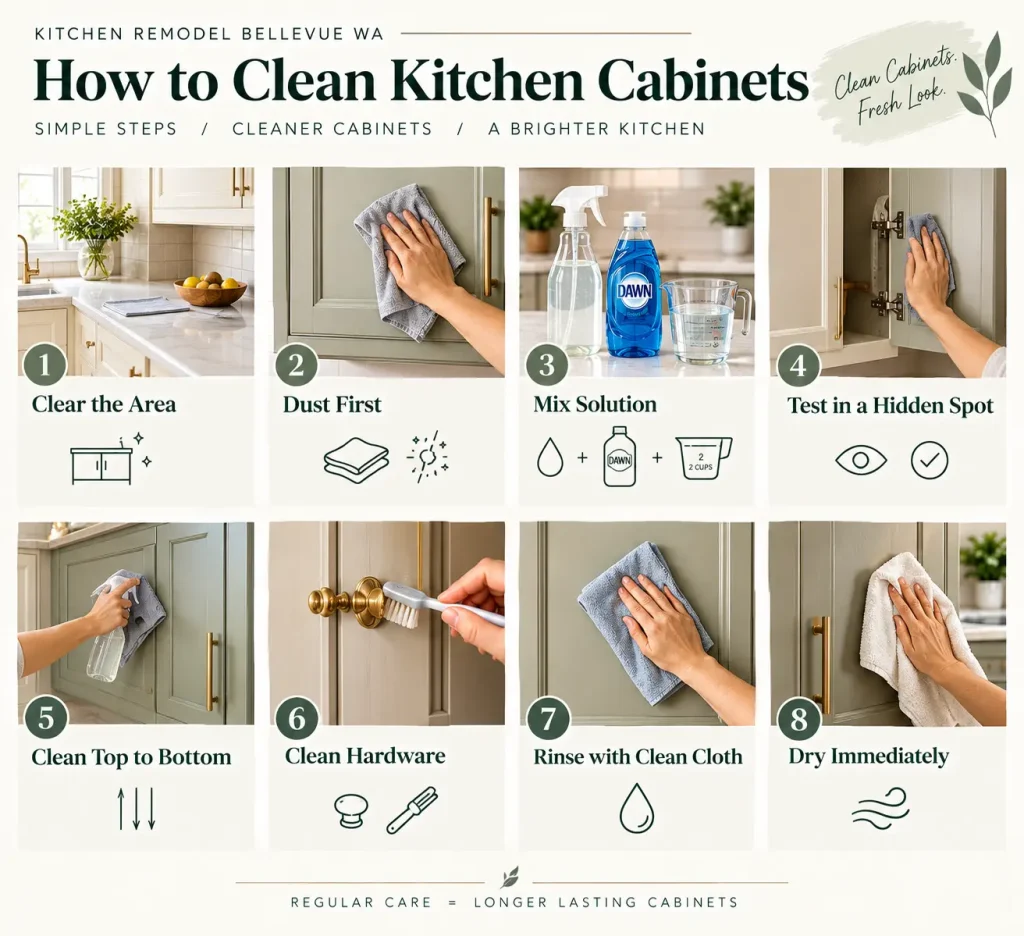
Step 1: Clear the Area
You should remove items from countertops near the cabinets you are cleaning. It is the best way to protect your floors and counters from a little friendly fire. Lay a towel on the kitchen countertop below upper cabinets to catch drips. It is the first step in how to clean kitchen cabinets.
Step 2: Dust First
Before applying any liquid, wipe all cabinet surfaces with a dry microfiber cloth to remove loose dust and debris. Dusting first prevents dust from mixing with your cleaning solution and creating muddy streaks. Pay particular attention to the tops of upper cabinets and the inside tops of cabinet doors.
Step 3: Mix Your Cleaning Solution
Mix 3 to 4 drops of mild dish soap in 2 cups of warm water in a spray bottle. This is the right concentration. It is enough to cut grease without leaving soap residue that attracts more dirt. You should shake gently before use.
Step 4: Test in a Hidden Area
Before cleaning all cabinets, you need to test your solution on an inconspicuous spot, often the inside of a door or the back corner of a frame. You should wait 2 minutes and wipe dry. If the finish looks unchanged, proceed. This step allows you to test in a hidden area how to clean kitchen cabinets.
Step 5: Clean Top to Bottom
Always clean from the top down, upper cabinets before lower, top of each cabinet door before the bottom. This prevents dirty drips from re-contaminating areas you have already cleaned. Spray your solution onto the microfiber cloth, not directly onto the cabinet. Apply to the surface with light, even pressure. Wipe with the grain on wood cabinets and work in small sections, one door at a time.
Step 6: Clean Hardware and Hinges
To really get at hidden grime, it is recommended that you remove your pulls and knobs at least once a year. Clean the fronts of your cabinets before putting handles back on. Use a soft-bristled detail brush dipped in your cleaning solution to clean around knobs, pulls, and hinges. Grease accumulates fastest in the gaps between hardware and cabinet door surfaces; this is where visible buildup first appears.
Step 7: Rinse with a Clean Damp Cloth
Wipe all cleaned surfaces with a second cloth dampened with plain water to remove soap residue. This is a critical step because soap left on cabinet surfaces creates a hazy film that attracts more grease and dirt over time.
Step 8: Dry Immediately
Rinse with a clean, damp cloth and dry immediately. Do not allow water to air-dry on cabinet surfaces. Even brief standing water causes paint to soften at edges and wood to swell at seams and joints. Dry each section completely before moving to the next. That’s why learning how to paint kitchen cabinets is also important, just like cleaning them.
How to Clean Kitchen Cabinets by Material Type
Different cabinet materials require specific cleaning approaches. Using the wrong method for your specific cabinet material is the most common cause of finish damage during routine cleaning. Let’s learn how to clean kitchen cabinets depending on the type of material.
How to Clean Wood Kitchen Cabinets
Wood kitchen cabinets, such as solid wood, veneer, or wood-look, are the most common cabinet material and the most susceptible to damage from excess moisture. You will want to thoroughly clean and oil your stained wood cabinets once or twice a year.
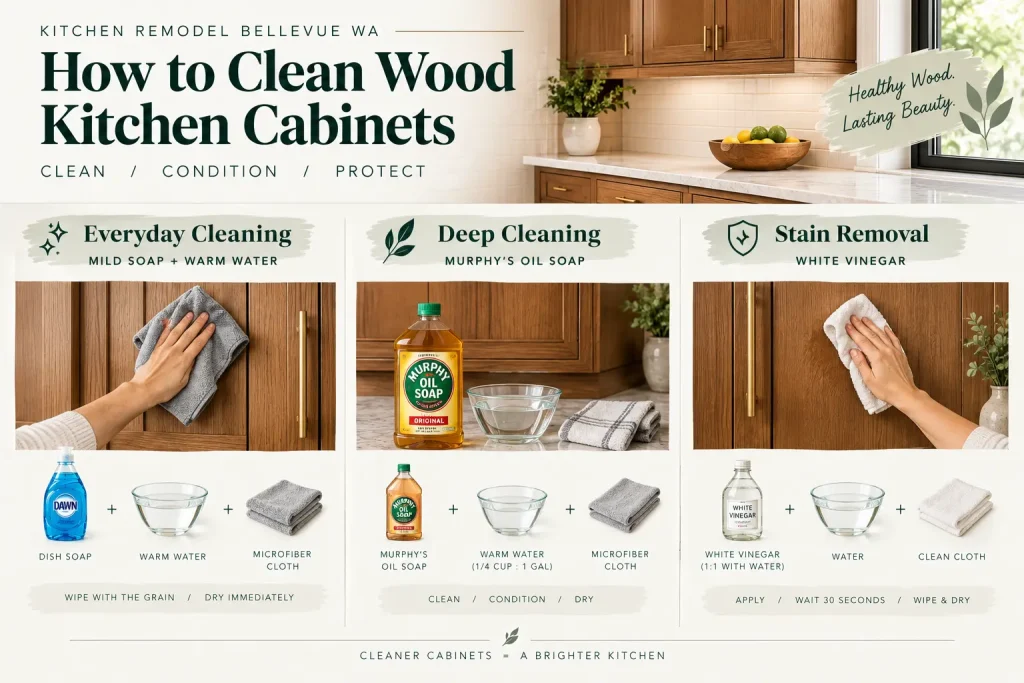
Wipe the cabinets down with this cleaning mixture using a microfiber cloth. This process will keep your cabinets looking new for a long time. For everyday cleaning, apply mild dish soap and warm water with a damp microfiber cloth. Wipe with the grain and dry immediately. This is how to clean kitchen cabinets.
Periodic Deep Cleaning for Wood Cabinets
Murphy’s Oil Soap on kitchen cabinets is one of the most effective and gentle cleaners for wood surfaces. It is diluted one-quarter cup per gallon of warm water, cuts through grease buildup, conditions the wood surface, and leaves a light sheen without damaging the finish.
Apply with a damp cloth, wipe clean, and dry immediately. Murphy’s Oil Soap on kitchen cabinets is safe for all sealed wood finishes. It is one of the most recommended products among professional cleaners for regular wood cabinet maintenance.
Best Stain Removal for Wood Kitchen Cabinets
White vinegar diluted 50/50 with water lifts surface oxidation and light staining on wood cabinets. Apply with a damp cloth, leave for 30 seconds, wipe clean, and dry immediately. For wooden cabinets, use a slightly more diluted solution to protect the finish.
How to Clean Painted Kitchen Cabinets
Painted kitchen cabinets require the gentlest approach. The paint layer sits on top of the substrate and is vulnerable to abrasion, harsh chemicals, and excessive moisture. Use mild dish soap and warm water as your everyday cleaner. For grease buildup, diluted Murphy’s Oil Soap works well on most painted finishes. This is how to clean kitchen cabinets.
Never use Magic Eraser on painted cabinets because it removes the paint sheen and eventually the paint itself with repeated use. For white painted kitchen cabinets specifically, avoid bleach because it weakens paint adhesion and causes long-term damage. A 50/50 vinegar and water solution lifts surface yellowing and oxidation on white painted surfaces. This is how to clean painted kitchen cabinets carefully.
How to Clean Laminate Kitchen Cabinets
Laminate cabinets are the easiest to keep clean because their surface does not have porous wood grains that absorb dirt and grease. Mild dish soap and water are all laminate cabinets require for everyday cleaning. The non-porous laminate surface does not absorb grease the way wood does; it sits on the surface and wipes off easily.
For stubborn buildup, a diluted all-purpose cleaner or white vinegar solution is safe on laminate. Avoid abrasive scrubbers on laminate; they scratch the surface and leave visible marks that cannot be repaired. Avoid excessive moisture at seams and edges because laminate can lift and delaminate when water penetrates the substrate. That’s how to clean kitchen cabinets through an easy process.
How to Clean Greasy Kitchen Cabinets
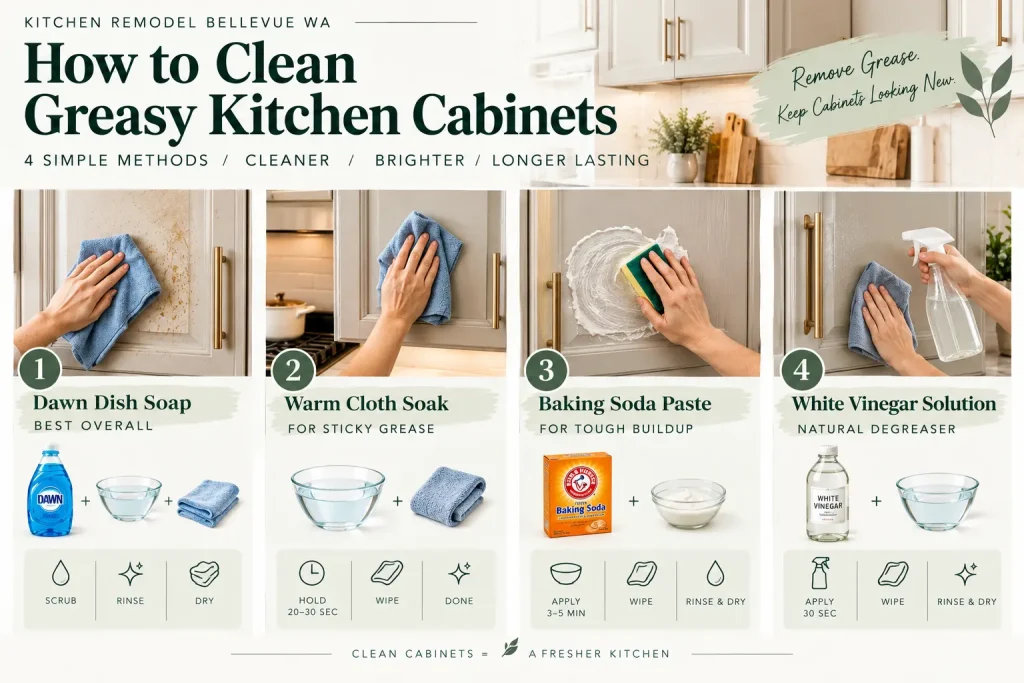
Greasy kitchen cabinets are the most common complaint among homeowners and the most frequently tackled cleaning challenge. Cabinets around your stove can get spattered with grease and oil. Here is how to remove greasy kitchen cabinet buildup effectively. Let’s explore how to clean kitchen cabinets.
Method 1: Dawn Dish Soap (Best Overall)
The best way to clean greasy cabinets is to scrub them with a soft rag or non-abrasive sponge and a mixture of Dawn dish soap and warm water. Wipe away any residue with a clean, damp sponge. This option is definitely the way to go for greasy kitchen cabinets.
Method 2: Warm Cloth Soak
For sticky, baked-on grease near the stove, place a warm, damp microfiber cloth directly over the greasy area and hold for 20 to 30 seconds. The warmth softens the grease so it wipes away without scrubbing. This prevents the aggressive scrubbing that damages finishes.
Method 3: Baking Soda Paste
Mix baking soda with a small amount of dish soap and warm water to form a thick paste. Apply to the greasy area, leave for 3 to 5 minutes, and gently wipe away. Rinse with a damp cloth and dry immediately. Don’t be tempted to add baking soda to vinegar, as you should never combine baking soda and vinegar to clean your cabinets.
Method 4: White Vinegar Solution
White vinegar’s natural acidity makes it exceptional at dissolving fatty molecules in kitchen grime without damaging cabinet finishes. Mix equal parts white vinegar and warm water. Apply with a damp cloth, leave for 30 seconds, wipe clean, rinse with a clean damp cloth, and dry immediately.
How to Clean Greasy Kitchen Cabinets Near the Stove
The cabinets near the stove receive the most grease exposure and require the most frequent attention. Here is a targeted approach for how to clean greasy kitchen cabinets in the highest-buildup areas.
Cabinets around your stove can get spattered with grease and oil. You can clean them quickly with a spray bottle of vodka and a few drops of Castile soap. Make sure to rinse the cabinets afterward with a damp microfiber cloth.
Wipe cabinet fronts with a Dawn and warm water solution after any cooking session that involves frying or high-heat cooking for routine maintenance near the stove. For daily maintenance, keep a spray bottle with diluted vinegar solution nearby and quickly wipe down cabinets after cooking sessions. It involves frying or high-heat cooking, when airborne grease is most prevalent.
For heavy accumulated grease near the stove that has been building for months, use the warm cloth soak method followed by a baking soda paste application. This combination softens and lifts baked-on grease without requiring aggressive scrubbing that damages the cabinet finish. That’s the ideal approach for how to clean kitchen cabinets. This is how to clean kitchen cabinets near the stove.
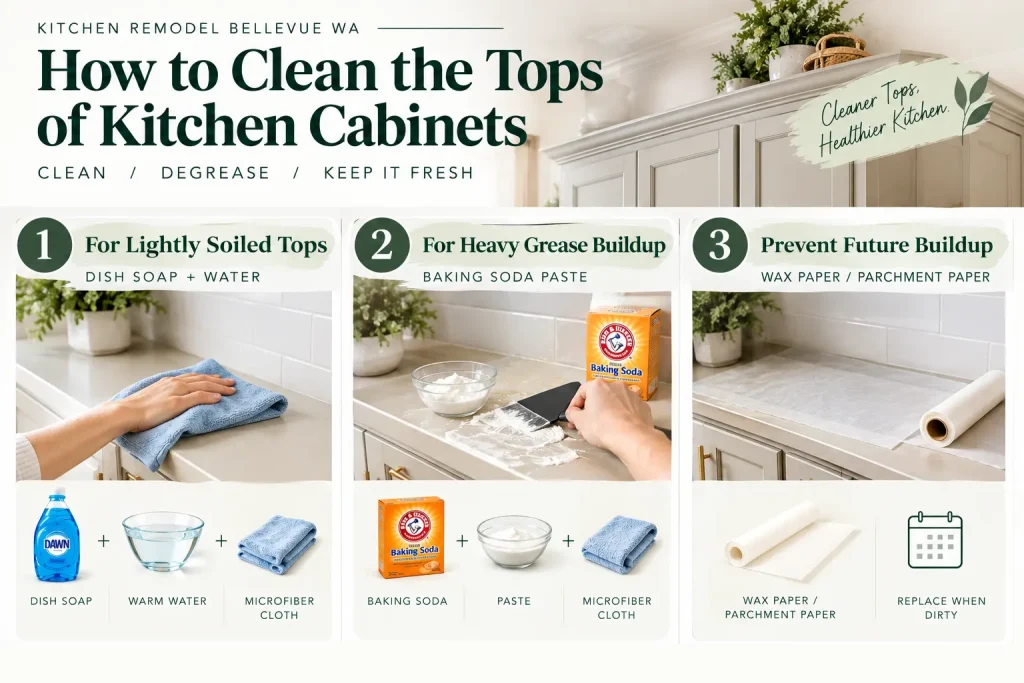
How to Clean the Tops of Kitchen Cabinets
The tops of cabinets often collect dust and grease. Wipe clean with a damp microfiber cloth. Cabinet tops are the most neglected area in kitchen cleaning and the most difficult to clean when neglect has allowed buildup to accumulate. Here is how to tackle them.
- For Lightly Soiled Tops: Wipe with a damp microfiber cloth dampened with dish soap solution. The combination of dust and light grease wipes away easily when addressed regularly.
- For Heavily Soiled Tops with Thick Grease Buildup: Apply baking soda paste to the surface, leave for 5 minutes, and wipe away with a damp cloth. For very thick buildup, a plastic scraper lifts the bulk before wiping, and do not use metal scrapers, which scratch surfaces.
- Prevention: Place a sheet of wax paper or parchment paper on top of upper cabinets. Replace it when it gets dirty; no cleaning required. This is the professional housekeeper’s trick for cabinet tops.
Murphy’s Oil Soap on Kitchen Cabinets
Murphy’s Oil Soap on kitchen cabinetry is one of the most searched and most debated cabinet cleaning materials for how to clean kitchen cabinets. Here is everything you need to know about this oil to maintain your sealed wood surfaces.
What is Murphy’s Oil Soap?
Murphy’s Oil Soap is a plant-based cleaner made from vegetable oil, specifically oleo (olive or coconut oil) saponified with potassium hydroxide. It is pH-neutral, biodegradable, and formulated for sealed wood surfaces.
Is Murphy’s Oil Soap Safe on Kitchen Cabinets?
Murphy’s Oil Soap on kitchen cabinets is safe for all sealed wood finishes, painted finishes, and laminate surfaces when properly diluted. It should not be used on unsealed or raw wood, waxed surfaces, or surfaces with a water-based finish that has not fully cured.
How to Use Murphy’s Oil Soap on Kitchen Cabinets
You should follow guidelines for using Murphy’s Oil Soap for kitchen cabinetry. Here is how to clean kitchen cabinets using Murphy’s Oil Soap.
- Dilute one quarter cup per gallon of warm water, or 1 to 2 tablespoons in a spray bottle of warm water
- Apply with a damp microfiber cloth; never saturate the surface
- Wipe with the grain on wood cabinets
- Rinse with a clean, damp cloth to remove residue
- Dry immediately and thoroughly
How Often to Use Murphy’s Oil Soap on Kitchen Cabinets
Monthly for regular maintenance. Weekly for cabinets near the stove in active family kitchens. Murphy’s Oil Soap on kitchen cabinets is safe for frequent use; it does not strip or damage finishes with regular application.
Murphy’s Oil Soap vs Dish Soap for Kitchen Cabinets
Both are safe and effective for kitchen cabinet cleaning. Dish soap is better for cutting through heavy grease. Murphy’s Oil Soap on kitchen cabinets is better for regular maintenance and conditioning wood surfaces. It leaves a very light protective residue that helps repel future grease.
What is the Best Degreaser for Kitchen Cabinets?
Knowing the best degreaser for kitchen cabinets saves time and prevents finish damage. Here are the most effective options, from household items to commercial products. These degreasers are helpful for how to clean kitchen cabinets. Let’s explore the best degreasers for kitchen cabinets.

1. Dawn Dish Soap + Warm Water
It is an ideal everyday solution to degrease kitchen cabinets for painting. Mix Dawn dish soap and warm water in a small bowl, then use a sponge to clean. This is definitely the way to go for greasy kitchen cabinets. Safe on all cabinet finishes, effective on moderate grease, and requires no special products.
2. Murphy’s Oil Soap
The best degreaser for kitchen cabinets made from wood. Use a rag to wipe cabinets with the solution, then use a second rag to wipe down cabinets with clean water to remove any residue and leftover grime. Murphy’s Oil Soap on kitchen cabinets is the professional’s choice for regular wood cabinet maintenance; it conditions while it cleans.
3. White Vinegar Solution
Best natural degreaser for kitchen cabinets. White vinegar’s natural acidity makes it exceptional at dissolving fatty molecules in kitchen grime without damaging cabinet finishes. Always dilute 50/50 with warm water for most surfaces, and more diluted for wood.
4. Simple Green (Diluted)
It is one of the best commercial degreasers for kitchen cabinets with heavy buildup. Mix 1 part Simple Green to 10 parts water. Safe on most cabinet finishes when properly diluted. Rinse thoroughly after use when degreasing kitchen cabinets for painting.
5. Krud Kutter
It is the top degreaser for kitchen cabinets near the stove where buildup is heaviest. You should spray directly on the cloth, not the cabinet. It is always a good approach to wipe, rinse, and dry immediately after degreasing the kitchen cabinets.
What Not to Use as a Degreaser
Commercial kitchen degreasers and products marketed for stovetop cleaning are too aggressive for painted and finished cabinet surfaces. Even a brief application can strip the sheen from satin and semi-gloss finishes permanently.
Degreasing Kitchen Cabinets for Painting
Degreasing kitchen cabinets for painting is a completely different process from routine maintenance cleaning. The goal for paint prep is complete removal of all grease, silicone, wax, and contamination, not just surface cleaning.
Paint cannot bond to grease. A surface that looks clean to the eye can still have an invisible grease film that completely prevents primer adhesion. It may cause paint to peel within weeks of application. This is the most common cause of premature cabinet paint failure. You need to learn how to clean kitchen cabinets with the help of a degreaser.
Best Degreaser for Kitchen Cabinets Before Painting
TSP (trisodium phosphate) is the professional standard for degreasing kitchen cabinets for painting. It cuts through kitchen grease more effectively than any household cleaner and prepares the surface for primer adhesion.
How to Degrease Kitchen Cabinets for Painting
Here is a step-by-step approach to degreasing cabinetry for painting purposes.
- Mix TSP per package instructions, typically one-quarter cup per gallon of warm water
- Apply to all cabinet surfaces with a sponge or cloth, working in sections
- Allow to sit for 2 to 3 minutes to break down grease and contamination
- Wipe clean thoroughly
- Rinse twice with clean water
- Allow all surfaces to dry completely, at least 2 hours before sanding or priming
How to Know Kitchen Cabinets are Clean Enough to Paint
Water beading on a cabinet surface after cleaning indicates grease or contamination is still present. Clean water should sheet evenly across a properly cleaned surface. If water still beads after TSP cleaning, repeat the degreasing process before proceeding.
Planning to Paint Your Cabinets? We Handle Prep Through Final Coat.
Professional degreasing, bonding primer, and HVLP spray application. Kitchen Remodel Bellevue WA handles the complete cabinet painting process.
Request a Free Estimate Call (425) 696-7060What is an Ideal Kitchen Cabinet Cleaning Schedule?
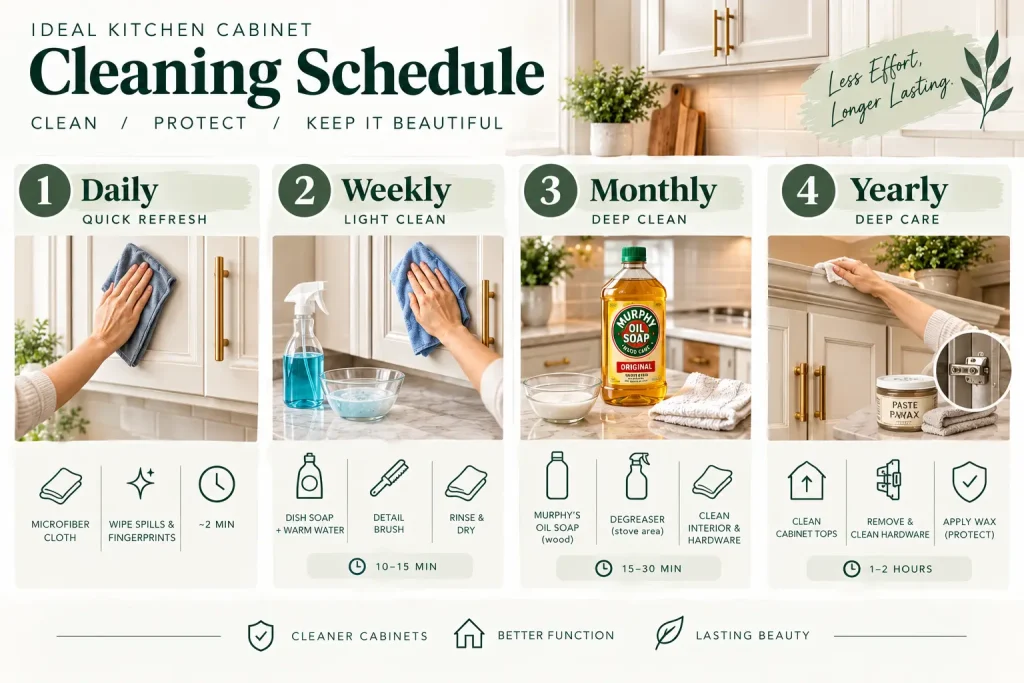
Regular maintenance not only preserves how your cabinets look, but also how they function. A consistent cleaning schedule is more effective than infrequent deep cleaning and significantly less damaging to cabinet finishes. Exploring the cleaning schedule is as important as knowing how to clean kitchen cabinets.
Daily Kitchen Cabinet Cleaning
Use a damp microfiber cloth to clean the visible spills, splatters, or fingerprints quickly. Consider the instant drying after cleaning the cabinetry. Wipe cabinet fronts near the stove after any frying or high-heat cooking. This daily cleaning may take up to 2 minutes.
Weekly Kitchen Cabinet Cleaning
Use warm water and a mild dish soap solution to wipe all cabinet fronts and frames. Consider using a detail brush around hardware. Rinse with a clean cloth and dry all surfaces quickly. The weekly cleaning can take 10 to 15 minutes.
Monthly Kitchen Cabinet Cleaning
Full clean with Murphy’s Oil Soap on kitchen cabinets (wood) or dish soap solution (painted/laminate). Use targeted degreaser to clean the grease buildup near the stove. Clean interior walls and shelves of cabinets before polishing them. Use a disinfectant wipe to clean handles and frequently touched areas.
Yearly Kitchen Cabinet Cleaning
Deep clean tops of upper cabinets. Remove hardware and clean cabinet fronts behind hardware. Apply paste wax or cabinet cream to exterior surfaces for a protective layer. Inspect edges, corners, and areas around hardware for finish damage.
What are Common Mistakes to Avoid When Cleaning Kitchen Cabinets?
Here are mistakes you need to avoid when you are focusing on how to clean kitchen cabinets.
- Using Too Much Water: Excess moisture penetrates at seams and edges, which causes paint to bubble, wood to swell, and laminate to delaminate.
- Spraying Cleaner Directly on Cabinets: This delivers too much liquid at once. Always spray the cloth, not the cabinet.
- Using Magic Eraser: Wipe clean with a damp cloth and dry thoroughly. It removes paint sheen and eventually paint itself with repeated use.
- Skipping the Rinse: Soap residue left on cabinet surfaces builds up over multiple cleaning sessions into a hazy film that attracts more grease.
- Using the Wrong Products Near the Stove: Commercial kitchen degreasers strip cabinet finishes.
- Not Drying Instantly: Standing water is the most common cause of cabinet damage from routine cleaning.
Ready for Cabinets That Look Clean and Last?
A professional spray finish is easier to clean and lasts longer than any DIY result. Kitchen Remodel Bellevue WA handles the complete cabinet refinishing process.
Get Help from Kitchen Remodel Bellevue for How to Clean Kitchen Cabinets
Knowing how to clean kitchen cabinets correctly is the difference between a maintenance routine that preserves your cabinets for years and one that gradually damages the finish. The best way to clean kitchen cabinets for most situations is mild dish soap and warm water applied with a microfiber cloth, rinsed, and dried immediately.
Kitchen Remodel Bellevue WA offers professional kitchen cabinet customization and complete cabinet refinishing when cleaning is no longer enough and when finishes have deteriorated beyond what cleaning can restore. Let’s get in touch with our professional team today!
Answers to Most Asked Questions About How to Clean Kitchen Cabinets
Frequently asked questions about how to clean kitchen cabinets are answered.
What is the best stuff to clean kitchen cabinets?
The best stuff to clean kitchen cabinets depends on your cabinet material. Dawn dish soap and warm water are perfect for dirty and greasy cabinets. Murphy Oil Soap is an ideal option for wood cabinets.
Is Dawn dish soap safe for wood cabinets?
Yes, Dawn dish soap is safe for wood cabinets when it is heavily diluted with water, used sparingly, and dried instantly. It is ideal for occasional deep cleaning to remove heavy grease.
Is Murphy’s Oil Soap good to clean wood cabinets?
Yes, Murphy’s Oil Soap is good for cleaning wood cabinets with proper dilution and rinsing. It may cut through grease and everyday grime. Murphy’s Oil Soap is also less abrasive than alkaline cleaners or heavy-duty chemical degreasers.
How do I make my kitchen cabinets look new again?
You need to clean, polish, paint, modify doors, or swap out hardware to make your kitchen cabinets look new again. The ideal choice to make the cabinetry new often depends on your budget and time.
How do you clean kitchen cabinets without removing the finish?
You can use a gentle method to clean kitchen cabinets without removing the finish. This effective approach involves lifting grime and grease without excessive moisture or harsh chemicals.
What is the best way to clean kitchen cabinets?
The best way to clean kitchen cabinets is to use warm water and mild dish soap like Dawn. You should apply the solution with a damp microfiber cloth to ensure smoother cleaning of the kitchen cabinetry.
2 Responses