Painted kitchen cabinets are one of the most cost-effective ways to transform a kitchen. However, they often need a specific cleaning approach that most homeowners get wrong. Learning how to clean painted kitchen cabinets is necessary to make the finish look fresh for a longer time. However, the wrong tool, the wrong cleaner, and the wrong approach may strip the finish, causing peeling or permanently dulling the surface.
You need the right methods to clean cabinetry when you are dealing with yellowing white cabinet doors, stubborn grease near the stove, or everyday fingerprints. Maintaining the best look of painted cabinetry without compromising the finish is very important. Kitchen Remodel Bellevue WA provides professional cabinet painting, refinishing, and full cabinet customization as standalone services for Bellevue homeowners whose cabinets have gone beyond what cleaning can fix.
Cabinets Looking Dull or Damaged? We Can Restore or Repaint Them.
Kitchen Remodel Bellevue WA offers professional cabinet repainting and refinishing across Bellevue and the Eastside with a factory-smooth spray finish that lasts 8 to 10 years.
In-home estimate from our licensed in-house team with no obligation.
Get an Estimate Now Call (425) 696-7060Table of Contents
Why Cleaning Painted Kitchen Cabinets the Right Way Matters
Painted cabinet surfaces are primarily different from factory-sealed or raw wood surfaces. The paint, whether it’s a water-based alkyd, standard latex, or an enamel, acts as a protective layer on top of the substrate. The layer remains durable under normal conditions but vulnerable to abrasive scrubbing, excessive moisture, and the wrong cleaning chemicals. An active kitchen with painted cabinetry is often exposed:
- Cooking Grease: Airborne grease from stovetop cooking may settle on every surface, including cabinet fronts, in a thin invisible film that builds over time.
- Dust: Settles inside and on top surfaces of cabinet corners, mixing with grease to form a stubborn layer of grime.
- Fingerprints and Oils: Concentrated around knobs and pulls, where daily contact deposits skin oils directly onto the painted surface.
- Food Splatters: Acidic foods like citrus juice, tomato sauce, and vinegar-based dressings may stain or etch painted finishes.
- Moisture and Steam: The daily steam exposure, especially around the stove, sink, and dishwasher, may weaken paint adhesion at corners and edges.
Learning how to clean is important before considering how to paint kitchen cabinets, as it helps you enjoy a seamless painting experience. When you don’t clean properly, grease mixed with dust may become harder to remove, increasing cleaning effort and the potential risk of finish damage.
The best way to clean painted kitchen cabinets involves gentle solutions to lift grime and grease without damaging the paint. The proper, consistent cleaning routine preserves the cabinet finish for a full lifetime of the paint job.
What You Need Before You Start Cleaning Painted Cabinets
It is important to have the right products and tools before you start protecting the finish of painted cabinets. Knowing what you need makes the cleaning process significantly more efficient. This is how to clean painted kitchen cabinets.
6 Best Painted Cabinet Cleaning Tools
It is necessary to consider the important cleaning tools when you are exploring how to clean kitchen cabinets before painting.
- Microfiber Cloths: It lifts fingerprints and grease without scratching and leaving lint behind. Keep several cloths to apply the cleaning solution, for rinsing, and for instant drying.
- Small Bowl or Bucket: An ideal tool to mix cleaning solutions for the painted kitchen cabinets.
- Spray Bottle: This tool is often used to apply cleaning solution to the cloth rather than directly to the surface of the cabinet.
- Soft-Bristled Toothbrush or Detail Brush: It helps in cleaning corners, around hardware, and along door edges.
- Step Stool: An essential tool to access and clean cabinet tops that collect the most grease.
Best Cleaning Products for Painted Cabinets
Here is what to use to clean painted kitchen cabinets.
- Baking Soda: Used as a paste for stubborn stains
- Commercial Cabinet Cleaner: Pledge Restoring Oil, Parker Bailey Cabinet Cream, or Weiman Cabinet Cleaner
- Distilled White Vinegar: Diluted for moderate grease
- Mild Dish Soap: Method, Dawn, or any pH-neutral dish soap
- Murphy Oil Soap: Safe, diluted for most painted finishes
- pH-neutral All-Purpose Cleaner: Method All-Purpose, Mrs. Meyer’s Clean Day

What Cleaning Products to Avoid for Painted Cabinets
It is important to consider avoiding the products that can easily damage painted cabinet finishes even when used carefully.
- Abrasive Sponges or Scrubbing Pads: They can create micro-scratches that dull the sheen and trap future dirt.
- Ammonia-Based Cleaners: Windex and several glass cleaners consist of ammonia that can degrade painted finishes with the passage of time and cause dulling.
- Bleach-Based Cleaners: These cleaners may weaken paint adhesion and discolor paint pigments.
- Harsh Commercial Degreasers: Products like Zep Heavy-Duty Degreaser, Goo Gone, and similar industrial cleaners are very aggressive for painted cabinet surfaces.
- Magic Eraser (Melamine Foam): Abrasive at a microscopic level that removes grease but also erodes the paint sheen and eventually the paint itself.
- Steam Cleaners: Excessive moisture and heat may penetrate paint and lead to adhesion failure, bubbling, and peeling.
What are the Best Products to Clean Painted Kitchen Cabinets?
It is necessary to consider the best products when you are looking to clean the painted cabinetry. The safest and best cleaner for painted cabinets is a simple mixture of warm water and a few drops of mild dish soap. Here is how to clean painted kitchen cabinets using different products.
Mild Dish Soap and Warm Water
It is the best product to clean painted kitchen cabinets. The warm water and mild dish soap wipe with the grain while skipping vinegar and harsh degreasers that may strip or dull the painted finishes over time. It is a good approach to use it weekly to cut through fingerprints, food splatter, and light grease without the risk to the finish.
pH-Neutral Cabinet Cleaners
Commercial cabinet cleaners specifically formulated for painted surfaces, like Parker Bailey Cabinet Cream or Weiman Cabinet Cleaner, are pH-neutral and safe for all painted finishes like semi-gloss and satin. These are useful for monthly deep cleaning and for addressing buildup in most used areas. This is how to clean painted kitchen cabinets using pH-neutral cleaners.
White Vinegar Solution
You should use these cleaners with caution to clean painted kitchen cabinets with a 50/50 diluted vinegar solution or a soft microfiber cloth with warm water and mild dish soap. A 50/50 mix of distilled white vinegar and warm water cleans moderate grease ideally. However, undiluted vinegar may dull painted finishes over time. You should avoid using vinegar on cabinets painted with oil-based paint or on high-gloss finishes because acid may react with the finish.
Baking Soda Paste
You should mix baking soda with just enough water to form a thick paste to clean stubborn stains. It’s good to use a soft cloth to apply it to a stubborn stain and leave it for 2 to 3 minutes before gently wiping away. Baking soda is mildly abrasive and can be used only on isolated stains. It is better to avoid using it as a general cleaning method and always test in a hidden area first.
Commercial Cabinet Cleaners
Weiman Cabinet Cleaner is safe, pH-neutral for wood and painted surfaces, to cut grease without stripping the finish. Parker Bailey Cabinet Cream conditions and cleans simultaneously while leaving a light protective film. Pledge Restoring Oil is a good option for monthly maintenance that adds a light sheen to semi-gloss and satin finishes. Diluted Murphy Oil Soap is safe for most painted cabinet finishes and effective on moderate grease buildup.
Not Sure If Your Cabinets Need Cleaning or Repainting?
Kitchen Remodel Bellevue WA offers in-home cabinet assessments. We tell you honestly whether cleaning, touch-up, or a full repaint is the right solution for your cabinets.
No sales pressure. No obligation. Just an honest assessment.
Book a Cabinet Assessment Call (425) 696-7060How to Clean Painted Kitchen Cabinets: Step-by-Step Guidelines
Most cabinet damage begins before you consider how to clean painted kitchen cabinets grease and other buildups. The rushed cleaning process may cause spot dulling, peeling, or swelling later. That’s why you need to create a step-by-step plan to clean painted kitchen cabinets. A short prep routine may help you reduce damage while keeping the finish intact.
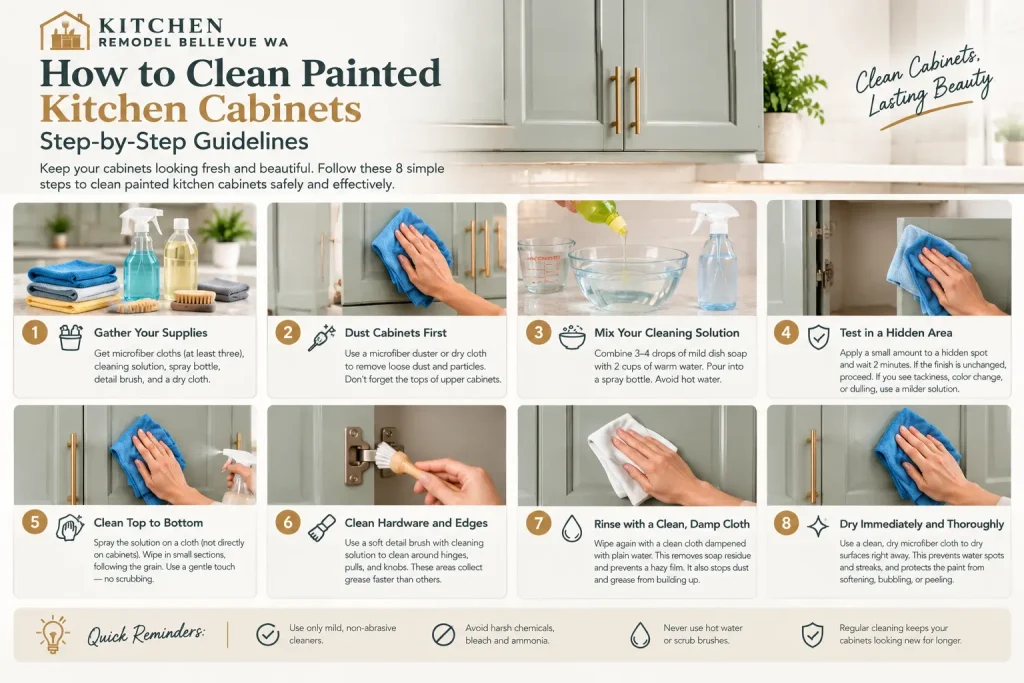
Step 1: Gather Your Supplies
The first step for how to clean painted kitchen cabinets is assembling everything before starting. The supplies may include microfiber cloths (at least three), your cleaning solution, a spray bottle, a detail brush, and a dry cloth for immediate drying. This prevents you from leaving wet solution sitting on cabinet surfaces while you look for a cloth.
Step 2: Dust Cabinets First
It is necessary to dust all cabinet surfaces with a microfiber duster or a dry microfiber cloth before applying any liquid. Dusting removes loose particles that would otherwise mix with your cleaning solution and scratch the surface during wiping. You should also pay attention to the tops of upper cabinets that can accumulate grease-laden particles and dust.
Step 3: Mix Your Cleaning Solution
You need to mix 3 to 4 drops of mild dish soap in 2 cups of warm water before pouring into a spray bottle. Warm water removes grease more effectively than cold. However, you should avoid using hot water that can soften paint on partially cured or freshly painted kitchen cabinet surfaces.
Step 4: Test in a Hidden Area
You should always test the cleaning solution on a hidden area before cleaning painted cabinets. It’s a good approach to apply a small amount to the back corner of a cabinet frame or the inner side of a cabinet door. Now, you need to wait for 2 minutes before wiping dry. The unchanged finish indicates that you can proceed. However, you need to use a milder solution if you note any tackiness, color change, or dulling. It’s a crucial step in how to clean painted kitchen cabinets.
Step 5: Clean Top to Bottom
You should start at the top and gently wipe each painted surface to prevent streaks from drips. Now, spray your cleaning solution onto the microfiber cloth while avoiding spraying directly onto the cabinet surface. A cloth dampened with solution provides you with control over how much liquid you use on the paint. You should work in small sections, like one cabinet panel or door at a time. You should wipe with the grain on wood cabinets using a gentle approach without scrubbing.
Step 6: Clean Hardware and Edges
This step involves paying additional attention to areas around the cabinet hardware or edges where grease can easily build up. You should use a soft-bristled detail brush dipped in your cleaning solution to clean around hinges, pulls, and knobs. You must remember that grease accumulates in these areas quicker than anywhere else on the cabinet. The detail brush reaches into the gap between the cabinet door and hardware surface where a cloth cannot.
Step 7: Rinse with a Clean, Damp Cloth
You may take a clean cloth dampened with plain water, wring it out well, and wipe the surface again to remove any soap residue. This step involves cleaning areas where you used soap solution and prevents a hazy film from building up. It’s important to remember that soap residue left on a painted surface may attract more dust and grease over time. Rinsing with a clean, damp cloth removes all residue while ensuring a streak-free clean surface.
Step 8: Dry Immediately and Thoroughly
You need to immediately use a clean, dry microfiber cloth to dry the cabinet surfaces. This step is crucial to prevent water spots and streaks. You should not allow water to air-dry on painted cabinet surfaces. A brief exposure to standing water may cause paint to soften, bubble, and peel, especially at corners and edges where moisture can penetrate easily. That’s how to clean painted kitchen cabinets.
How to Clean Painted Kitchen Cabinets Grease
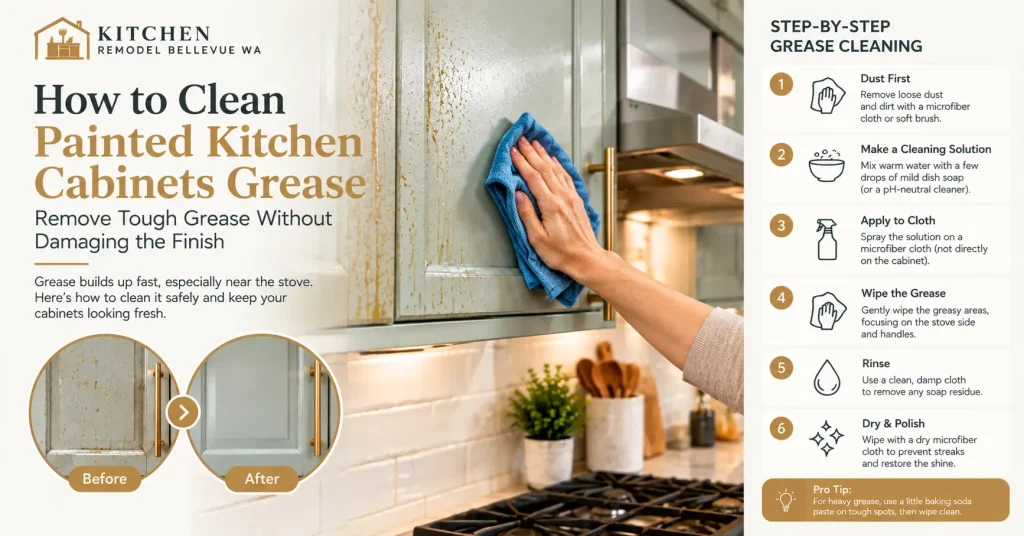
Grease is the most challenging substance to remove from painted kitchen cabinets. It can easily and quickly accumulate in the area around the range hood and stove. Airborne grease from stovetop cooking settles on every surface in the kitchen. Cabinet fronts closest to the cooktop receive the highest concentration.
The Warm Cloth Soak Method for Sticky Spots
Sticky spots are annoying because wiping them right away may spread them around. The key is to let a warm, damp cloth sit on the spot for 20 to 30 seconds first. It softens the residue to make it come off easily. Learning is important for how to clean painted kitchen cabinets.
It’s time to place a warm, damp microfiber cloth directly over the sticky or greasy spot and hold it in place for 20 to 30 seconds. The moisture and warmth soften the grease, making it easy to wipe away without scrubbing. This approach works on both moderately aged and fresh grease buildup.
Best Degreaser for Painted Cabinets
A diluted Murphy Oil Soap solution that contains one quarter cup per gallon of warm water is the safest, effective degreaser to clean heavy grease buildup from painted surfaces. You may apply with a damp cloth, leave for 30 seconds, and wipe clean. Now, it’s time to use a clean, damp cloth to rinse and dry immediately.
A diluted Simple Green solution is perfect for very heavy grease buildup that Murphy Oil Soap and dish soap are unable to address. One part Simple Green to ten parts water is safe on most painted finishes. You should test in a hidden area before rinsing it thoroughly.
Baking Soda Paste for Heavy Grease
You should mix a small amount of warm water and dish soap with baking soda to form a thick paste. Now, you have to apply it to the greasy area with a soft cloth, leave it for 3 to 5 minutes, and gently wipe it away using a circular motion with minimal pressure. It’s time to rinse it with a damp cloth and dry it instantly. This is how to clean painted kitchen cabinets using baking soda paste.
Grease and Stains Beyond What Cleaning Can Fix?
Cleaning is not enough when cabinet surfaces are permanently stained, peeling, or yellowed. Professional cabinet repainting restores them completely for a fraction of replacement cost.
Kitchen Remodel Bellevue WA offers an estimate with how to clean painted kitchen cabinets.
Request My Estimate Call (425) 696-7060How to Clean White Painted Kitchen Cabinets
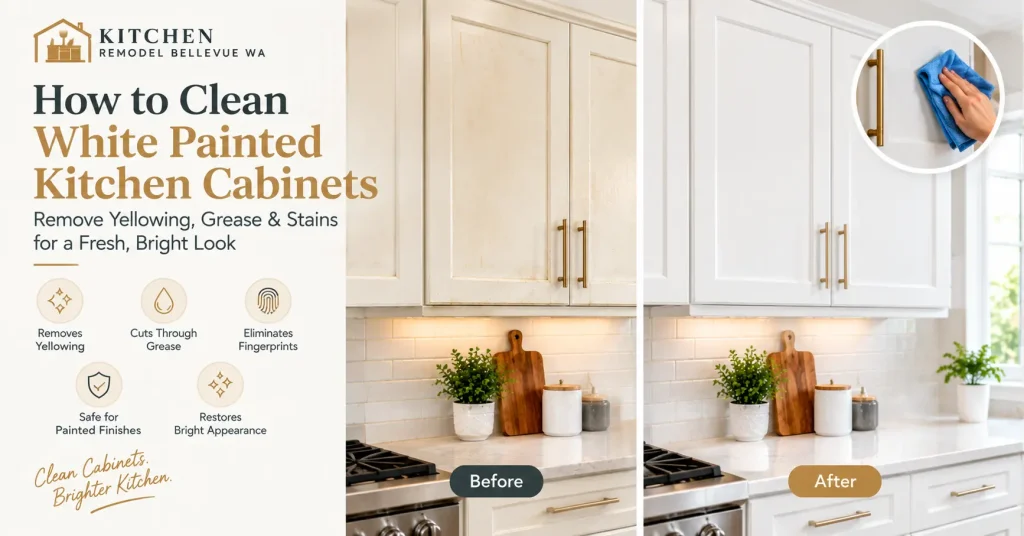
White painted cabinetry shows every grease splash, every fingerprint, and every cleaning mistake more visibly than any other color. They also represent a specific challenge of yellowing that other colors do not.
Why White Cabinets Turn Yellow
White cabinetry paint yellows for many reasons, like UV light from windows and overhead lighting and exposure to cooking oils and grease. The natural yellowing occurs as the alkyd resin in case of the oil-based paints. You should remember that kitchens without adequate ventilation often yellow quicker than a well-ventilated space. Here is how to clean painted kitchen cabinets.
Cleaning Method for White Cabinets
You can also use mild dish soap and warm water as a primary cleaner with the same approach for any painted cabinet. A 50/50 mix of distilled white vinegar and warm water applied with a damp cloth may lift light staining and oxidation for discoloration and yellowing. You should follow with a thorough rinse and immediate drying.
What Not to Use on White Cabinets
Using bleach is the most common mistake on white cabinets because homeowners assume that bleach will whiten yellowed surfaces. Bleach may weaken paint adhesion, strip the finish sheen, and may cause paint to become brittle and crack. You should avoid using bleach on painted white kitchen cabinets. That’s how to clean painted kitchen cabinets without using bleach and other harmful chemicals.
When White Cabinets Need Repainting
The discoloration or yellowing is likely within the paint film itself rather than on the surface when thorough cleaning is unable to restore the appearance of white painted cabinets. So, repainting is the only solution for the cabinets. At Kitchen Remodel Bellevue, kitchen remodel contractors offer professional cabinet repainting as a standalone service in Bellevue and across the Eastside.
How to Clean Painted Kitchen Cabinets Without Removing Finish
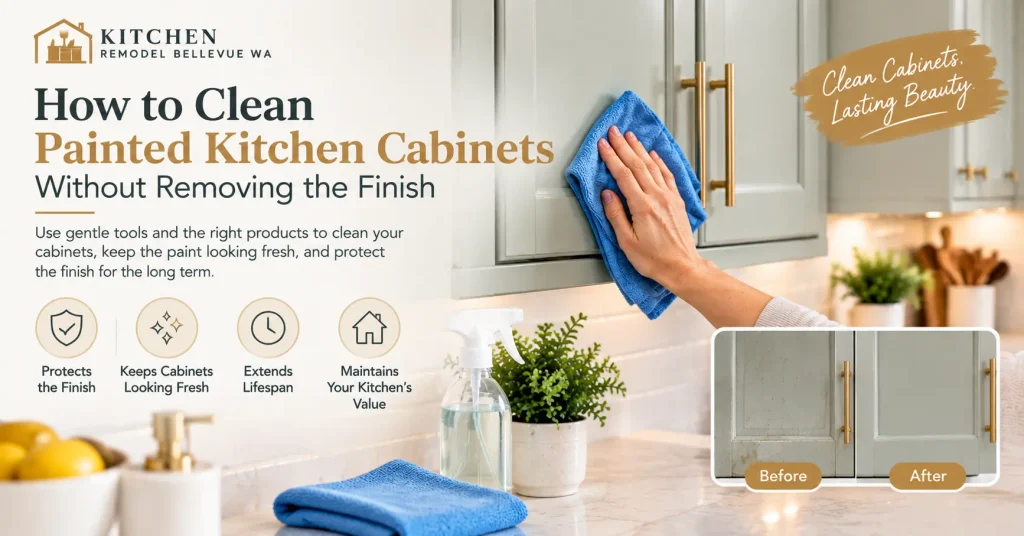
The most common reason for finish damage during cleaning is not the product, but the technique. Leaving moisture on the surface, using the wrong cloth, and aggressive scrubbing are three common ways homeowners accidentally dull or strip their cabinet finish during a routine cleaning.
Use the Right Cloth
Microfiber is the only cloth that should contact painted cabinet surfaces during cleaning. Paper towels and cotton cloths are slightly abrasive at a microscopic level, especially when used repeatedly over months and years. They also gradually dull semi-gloss and satin finishes. Scrubbing pads and rough sponges may cause instant, visible damage.
Apply Correct Pressure
You should wipe painted surfaces with light, even pressure. The cleaning solution works ideally; physical pressure is only required to guide the cloth across the surface. You may need to soak the stain with the warm cloth technique if it does not come off with light pressure before trying to wipe it away.
Spray the Cloth, Not the Cabinet
It’s always recommended to spray your cleaning solution onto the cloth, not directly onto the cabinet. Direct spraying on the surface delivers too much liquid in one spot and increases the risk of moisture penetrating paint around hardware, corners, and edges. It is recommended to spray the cloth during how to clean painted kitchen cabinets.
Rinse and Dry Every Time
Every cleaning session must end with a rinse using a clean, damp cloth and instant drying with a dry cloth. Skipping either step may lead to soap film buildup that attracts moisture and grease damage at edges that is visible weeks later as bubbling or peeling paint.
How to Clean Kitchen Cabinets for Painting
Cleaning cabinets before painting is a totally different process from how to clean painted kitchen cabinets. The primary goal is to remove all oils, grease, silicone residue, and contamination that often prevents paint and primer from bonding to the surface, not just to make the surface look clean.
Why Pre-Paint Cleaning is Critical
Paint cannot adhere to grease. A surface that appears clean to the eye may still have an invisible film of cooking oil that entirely prevents primer adhesion and leads to peeling within weeks or months of painting. Professional cabinet painters test surfaces for contamination before priming, not after.
TSP Cleaner for The Professional Standard
TSP (trisodium phosphate) is the professional standard for cleaning cabinets before painting. It cuts through kitchen grease more effectively than any household cleaner and prepares the surface for primer adhesion.
How to use TSP:
Let’s learn how to use the best product to clean kitchen cabinets before painting. Here is how to clean painted kitchen cabinets.
- Mix TSP powder with warm water per the package instructions, usually one-quarter cup per gallon of water.
- Apply to all cabinet surfaces with a cloth or sponge, working in sections.
- Allow to sit for 2 to 3 minutes to break down contamination and grease.
- Wipe clean and rinse thoroughly with clean water.
- Allow all surfaces to dry completely before priming or sanding.
Best Cleaner for Cabinets Before Painting
TSP or a TSP substitute like Dirtex or Savogran TSP Substitute is the best pre-paint cleaner for kitchen cabinets. Simple Green diluted 1:4 is an effective alternative for lighter contamination. Standard household cleaners like dish soap are not strong enough for pre-paint surface preparation in an active kitchen. You can use this best cleaner to clean kitchen cabinets before painting.
How to Know Cabinets Are Clean Enough to Paint
Water beading on a cabinet surface indicates the presence of contamination or grease. Clean water may sheet evenly across a clean surface without beading. You should repeat the cleaning process before proceeding to primer for kitchen cabinets if water still beads after TSP cleaning.
What is the Best Clear Coat for Painted Kitchen Cabinets?
A clear coat applied over painted kitchen cabinets offers a safe layer that extends the life of the paint job and makes ongoing cleaning easier. It’s important to note that not every painted cabinet requires a clear coat. High-quality cabinetry paints like Sherwin-Williams Emerald Urethane and Benjamin Moore Advance are formulated to cure hard without one. A clear coat is worth the additional step for cabinets painted with standard paint or in a very high-use area. Here are the ideal clear coats for how to clean painted kitchen cabinets.
Water-Based Polyurethane
Water-based polyurethane is the most durable clear coat for painted kitchen cabinets. It is a highly resistant option to cleaning chemicals and moisture to cure extremely hard. This clear coat does not yellow with the passage of time, making it an ideal choice for light-colored or white cabinets. You should apply two thin coats with a high-quality fine-finish roller or a synthetic brush. It is important to sand lightly between coats with 320-grit sandpaper.
Polycrylic
Minwax Polycrylic is a water-based clear coat, slightly less hard than polyurethane and easier to apply without brush marks. It’s a good option for homeowners applying clear coat for the first time and for cabinets that receive moderate rather than heavy use.
Paste Wax
Carnauba paste wax applied once or twice per year is the easiest safe treatment for painted cabinets. It is not as durable as polycrylic or polyurethane but adds a light protective layer and a subtle sheen to make cleaning easier. You should apply sparingly with a soft cloth, buff to a light sheen, and allow to cure before use. It is an ideal option for how to clean painted kitchen cabinets.
When Clear Coat is Not Needed
Cabinets painted with Sherwin-Williams Emerald Urethane, Benjamin Moore Advance, or other water-based alkyd cabinet paints don’t need a clear coat. These paints cure to a hard enamel finish that is already highly washable and durable. Adding a clear coat over these paints may interfere with the finish look if not carefully applied.
What is a Painted Kitchen Cabinet Cleaning Schedule?
A consistent cleaning routine is the single most effective method to safeguard painted cabinet finishes for a longer time. Infrequent deep cleaning may require more risk and more effort to the finish than regular gentle maintenance.
Daily Cleaning (2 minutes)
Here is a daily schedule for how to clean painted kitchen cabinets:
- Wipe any fingerprints, splatters, or spills instantly with a damp microfiber cloth.
- Consider drying immediately after wiping.
- Wipe cabinet fronts near the stove after cooking in the case of visible splashes.
Weekly Cleaning (10-15 minutes)
Consider the weekly schedule for how to clean painted kitchen cabinets.
- Mix warm water and mild dish soap solution.
- Wipe all cabinet frames and fronts with a damp microfiber cloth.
- Use a detail brush around cabinetry hardware.
- Rinse with a clean, damp cloth.
- Dry all cabinet surfaces instantly and thoroughly.
Monthly Deep Clean (30-45 minutes)
Follow the monthly schedule for how to clean painted kitchen cabinets.
- Use dish soap solution for full cabinet cleaning.
- Address the grease buildup near the stove with Murphy Oil Soap solution.
- Clean cabinet interiors, including door interior faces, interior walls, and shelves.
- Clean and polish kitchen cabinet hardware.
- Apply Parker Bailey Cabinet Cream or cabinet cleaner to all exterior surfaces.
- Inspect for any moisture damage, peeling edges, or paint chips.
Annual Painted Kitchen Cabinet Maintenance
The yearly schedule is also important in how to clean painted kitchen cabinets.
- Apply carnauba paste wax to all exterior painted surfaces for a protective layer.
- Analyze all door edges, corners, and areas around hardware for paint adhesion problems.
- Touch up any scratches pr chips with matching cabinet paint.
- Consult a professional refinisher if you note the finish appears stained, abraded, or dull during inspection.
What are 7 Common Mistakes When Cleaning Painted Kitchen Cabinets?
It’s important to avoid the most common mistakes, such as soaking wet cloths, using abrasive scrubbers, or harsh chemical cleaners. These mistakes may cause water damage, dull the finish, and strip the paint. Let’s learn about the common mistakes homeowners make during cleaning the painted cabinetry.
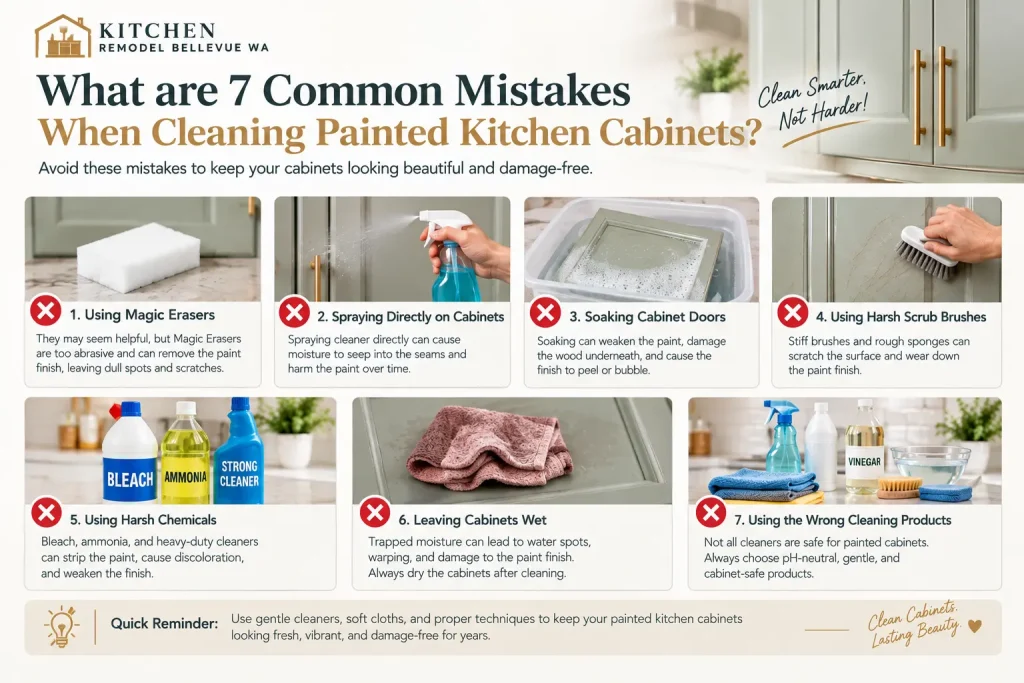
Using Magic Eraser
It’s a melamine foam made of a material with a microscopic abrasive structure, harder than most paint. This material physically abrades the surface to remove stains while also removing paint sheen. A Magic Eraser used on satin-finish cabinets leaves dull patches, which cannot be restored without repainting. That’s why you must avoid using Magic Eraser on painted cabinets under any circumstances.
Spraying Cleaner Directly on Cabinets
Spraying a cleaning solution directly on a kitchen cabinet surface may deliver too much liquid at once. This approach of spraying cleaners directly on the cabinets can increase the risk of moisture penetrating at edges. Therefore, it is always recommended to spray the cleaning solution on the cloth, not the cabinet.
Not Rinsing After Cleaning
Soap residue is usually left on painted surfaces and builds up over multiple cleaning sessions into a hazy film. It attracts grease that becomes difficult to remove from the painted kitchen cabinets. So, you need to rinse with a clean, damp cloth after using any soap-based cleaner for cleaning the cabinets.
Not Drying Immediately
When you allow water to sit on painted cabinet surfaces even for a few minutes, it increases the risk of moisture damage at corners, edges, and around hardware. It is necessary to dry every cabinet surface instantly after rinsing. That’s why you need to be very careful when drying painted cabinetry after cleaning. it’s a costly mistake when you are looking for how to clean painted kitchen cabinets.
Scrubbing Too Hard
The cleaning solution may work, not physical pressure. Scrubbing hard on painted cabinet surfaces can cause micro-scratches that dull the finish with the passage of time and trap future dirt. You should soak the stain with a warm cloth instead of scrubbing with pressure if it does not respond to gentle wiping.
Using the Wrong Cloth
Paper towels are abrasive and may leave lint on the painted kitchen cabinets. Rough sponges often scratch the painted cabinetry. Moreover, the old cotton rags can become abrasive on the surface. It is important to remember that microfiber cloths are the only safe cleaning cloth for painted cabinet surfaces.
Cleaning in High Heat
Cleaning cabinets immediately after heavy cooking when cabinet surfaces are still warm from stovetop heat may cause cleaning solutions to dry too fast and leave residue. It’s not a good strategy to clean kitchen cabinetry in high heat. Therefore, you must allow cabinets to cool before cleaning them.
What are Signs You Need to Repaint When Cleaning is Not Enough?
Regular cleaning of painted kitchen cabinets maintains a finish in good condition. However, there are situations where cleaning cannot restore a painted cabinet surface. You may need to repaint cabinets when they show persistent damage, structural failure, or wear that water and soap cannot fix. Learning repainting conditions is as important as knowing how to clean painted kitchen cabinets.
Chipping or Peeling Paint
Chipping from door fronts or peeling from corners, as well as the failure of adhesion between the paint and the substrate when paint is lifting at edges. Cleaning is not enough to restore adhesion because the affected area needs to be sanded, primed, and repainted.
Permanent Staining
Some staining agents often come from ink, certain food dyes, and hardware. They can permanently stain paint pigments. The stain is likely within the paint film and can be addressed by repainting if baking soda paste and deep cleaning do not remove it. Permanent staining is a sign when how to clean painted kitchen cabinets is not enough.
Irreversible Yellowing on White Cabinets
White cabinet paint that has become yellow from age, oil-based chemistry, or grease exposure cannot return to its original color through cleaning. Professional repainting with a quality water-based alkyd in white may restore the full appearance.
Dull Finish That Cleaning Does Not Restore
A painted finish that has lost its sheen due to years of cleaning with the wrong products, chemical exposure, or micro-scratching may make it difficult to restore the original paint. A light polish with a non-abrasive cabinet cream may improve the look in some cases. However, professional refinishing is the ideal solution in most cases. We help you with how to clean painted kitchen cabinets.
Ready for Cabinets That Stay Clean and Last in Bellevue?
Clean cabinets start with a quality paint job. Kitchen Remodel Bellevue WA applies a professional spray finish that resists grease, cleans easily, and holds up for 8 to 10 years.
500+ Bellevue kitchens completed. Receive an in-home estimate as soon as possible.
Get Professional Help for Cabinet Painting and Cleaning in Bellevue
Learning how to clean painted kitchen cabinets is necessary with the right tools, products, and technique. Mild dish soap and warm water, a microfiber cloth, and consistent drying after cleaning are the foundation of a routine that keeps painted cabinets looking fresh for years. When cleaning is no longer enough, Kitchen Remodel Bellevue WA offers professional cabinet repainting and refinishing across Bellevue and the full Eastside. Contact us today for an in-home estimate backed by workmanship reliability.
Answers to Frequently Asked Questions About How to Clean Painted Kitchen Cabinets
Common questions about how to clean painted kitchen cabinets are answered.
What do I use to clean my wooden painted cabinets?
You use a few drops of mild dish soap mixed with warm water and a soft microfiber cloth to clean wooden painted cabinets. This cleaning solution helps you clean the painted cabinetry effectively.
How to clean painted kitchen cabinets without removing paint?
You may use an ideal mild solution of warm water and a few drops of dish soap that is applied with a damp microfiber cloth to clean kitchen cabinets without removing paint.
Can I use a magic eraser on painted cabinets?
No, you cannot use a magic eraser on painted kitchen cabinets because it’s abrasive foam that may dull the satin sheen of paint and strip the cabinetry finish completely.
How to clean painted kitchen cabinets with vinegar?
You can use a 50/50 mixture of distilled white vinegar and warm water to clean grime and grease from the painted kitchen cabinets. This is how to clean painted kitchen cabinets with vinegar.
What not to use to clean kitchen cabinets?
You should not use excessive moisture, abrasive scrubbers, or harsh chemicals on your kitchen cabinets because they can warp the wood, scratch the surface, and strip the finish.
How do you remove years of grime from kitchen cabinets?
You may use a mixture of warm water and dish soap for standard buildup, or create a baking soda paste for sticky, thick layers. This is how to clean painted kitchen cabinets of years of grime.