Primer is the most skipped and most important step in the kitchen cabinet painting project. Zinsser B-I-N Shellac-Based Primer is the best primer for kitchen cabinets. Primer helps determine whether your finished cabinets look professional and last a decade or start peeling within 18 months. The right primer creates a mechanical and chemical bond between the cabinet surface and the topcoat that paint alone cannot achieve.
It blocks tannin bleed from wood species like oak and cherry, seals MDF edges against moisture absorption, and provides the adhesion that allows paint to grip glossy, factory-finished surfaces that would otherwise reject it entirely. There are different kitchen cabinet primers such as shellac-based, water-based bonding, oil-based stain-blocking, and acrylic urethane formulas. Each primer has unique advantages for specific cabinet materials and conditions. Kitchen Remodel Bellevue WA offers professional cabinet customization and painting for homeowners who want ideal primer and paint application without the DIY guesswork.
Skip the Primer Guesswork: Get Professional Cabinet Painting in Bellevue
Kitchen Remodel Bellevue WA uses professional-grade primer and paint systems on every cabinet job, the right product for your specific cabinet material, applied the first time correctly.
In-home estimate from a licensed in-house team.
Get a Cabinet Painting Estimate Call (425) 696-7060Table of Contents
Why is Primer Non-Negotiable for Kitchen Cabinets?
Most DIY cabinet paint fails because of skipping primer or using the wrong one. That’s why you can face difficulties due to just one wrong decision. Understanding what the best primer for kitchen cabinets is why it should not be skipped or substituted.
What Primer Does
The best primer for painting kitchen cabinets serves three unique functions on the cabinetry surfaces:
- Adhesion: Creates a surface that paint can easily mechanically grip. Laminate surfaces, factory cabinet finishes, and previously painted cabinets have non-porous, smooth surfaces that paint slides off without a proper primer layer beneath it.
- Stain Blocking: Seals tannins in wood species like walnut, cherry, and oak that bleed through paint and lead to brown or yellow discoloration in the topcoat.
- Sealing: Closes the pores of raw wood and MDF, allowing paint to absorb evenly rather than soaking into some areas and sitting on others.
Why Kitchen Cabinets Need Dedicated Primer
Standard wall primer is formulated for drywall that offers a flat, porous surface. It is different from the materials kitchen cabinets are made from. A wall primer may not provide adequate adhesion on cabinet surfaces and does not block tannin bleed effectively.
It does not create a hard enough base for the repeated cleaning, moisture exposure, and daily contact kitchen cabinets endure. Kitchen cabinets require a dedicated cabinet primer with the bond strength and stain-blocking capability that cabinet-specific work demands.
What Happens When You Skip Primer
Skipping primer may lead to early chipping, peeling, and stains bleeding through the new finish. The failure is often easily visible at the highest-contact points like hardware locations, door edges, and corners before spreading across the full surface. That’s why you should use a primer for kitchen cabinets before painting to improve adhesion, block stains, and prevent peeling.
Why Paint and Primer in One Is Not Enough
Paint-and-primer-in-one products are not ideal for cabinets. The best primer and paint for kitchen cabinets ensure proper adhesion and stain blockage. Using a separate primer offers better durability and long-term performance. All-in-one products are a convenience compromise that is acceptable for wall repaints, inadequate for the demands of kitchen cabinet surfaces.
What Are the Different Types of Primer for Kitchen Cabinets?
Water-based (waterborne/acrylic), oil-based (alkyd), and shellac-based are types of the top primers for kitchen cabinets. Not all primers are created equal for cabinets. Water-based primers are a go-to for most projects because they have low odor, clean up easily, and dry quickly. Oil-based primers provide superior stain blocking but come with stronger fumes and longer drying times. Bonding primers are essential for glossy surfaces or materials like laminate where adhesion is challenging.
| Type | Best For | Dry Time | Cleanup | Odor | Stain Block |
| Water-Based Bonding | Most cabinet surfaces | 1 to 2 hours | Water | Low | Moderate |
| Shellac-Based | Oak, cherry, laminate, stains | 45 minutes | Denatured alcohol | Strong | Excellent |
| Oil-Based | Raw wood, heavy stains | 24 hours | Mineral spirits | Very Strong | Excellent |
| Acrylic Urethane | High-end refinishing, glossy | 1 to 2 hours | Water | Low | Good |
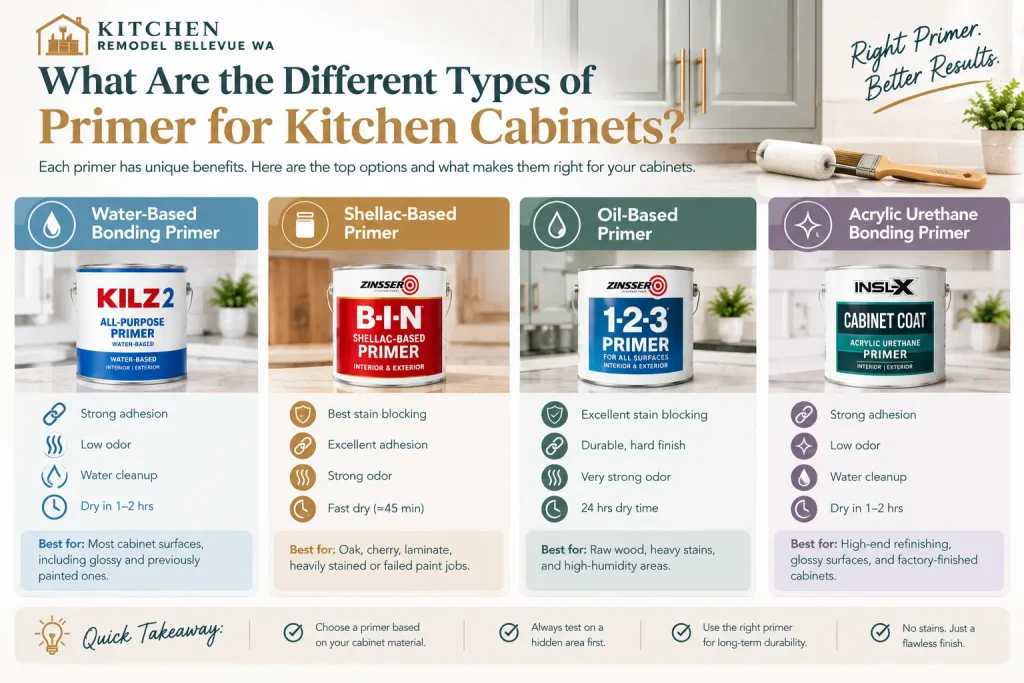
Water-Based Bonding Primer for Kitchen Cabinets
The best primer for kitchen cabinets that serves as a professional standard for painting projects. It provides strong adhesion on moderately glossy, lightly sanded factory finishes, birch, maple, MDF, and previously painted surfaces.
It dries in 1 to 2 hours, cleans up with water, and has significantly lower VOC content than oil-based alternatives. A water-based bonding primer is the right starting point for most cabinet materials in good condition. There is a low to moderate odor with this best bonding primer for kitchen cabinets.
Shellac-Based Primer for Kitchen Cabinetry
Shellac-based primer is the strongest adhesion and stain-blocking primer for cabinets. It bonds to virtually any surface, including surfaces that water-based primers struggle with. It also blocks tannin bleed from oak and cherry more effectively than any water-based alternative.
It is an ideal primer for cherry and oak cabinets, laminate, heavily stained surfaces, and previously failed paint jobs. It dries in approximately 45 minutes to recoat and is easy to clean up with denatured alcohol only. Zinsser B-I-N Shellac-Based Primer is the best primer for kitchen cabinets with no sanding. There is a strong odor that demands ventilation when you are using this primer.
Oil-Based Primer for Kitchen Cabinets
Traditional oil-based primers provide excellent stain blocking and a hard, durable base coat for topcoats. They penetrate wood deeply for strong adhesion, block most stains effectively, and produce a very flat, smooth surface for topcoats.
It is the best primer for raw wood cabinets, heavily stained surfaces, and high-humidity environments. VOC content, mineral spirits cleanup, 24 hour dry time are the potential drawbacks. There is also a need for heavily ventilated or outdoor application due to the very strong odor.
Acrylic Urethane Bonding Primer
Acrylic urethane bonding primer is a professional cabinet primer type that painters love. It offers low odor and is easier to apply than shellac, making it a perfect option for high-end cabinet refinishing, glossy surfaces, and factory-finished cabinets.
Acrylic urethane primers bridge the gap between water-based convenience and shellac-grade adhesion. They bond more aggressively than standard water-based primers on difficult surfaces while remaining water-cleanup with approximately 1 to 2 hours drying time.
Not Sure Which Primer Your Cabinets Need?
Kitchen Remodel Bellevue WA assesses your cabinet material, like wood, laminate, MDF, or factory finish, and selects the right primer system before any work begins.
Professional consultation. No obligation. Quick Response.
Book Your Consultation Call (425) 696-7060Top Picks: Best Primer for Kitchen Cabinets
Zinsser B-I-N Shellac-Based Primer is the overall top pick because this Shellac-based primer provides elite stain-blocking and a sandable, smooth surface. INSL-X Stix Waterborne Bonding Primer is best for slick and laminate surfaces. Zinsser Cover Stain Oil-Based Primer is ideal for stained or raw wood. KILZ 2 All-Purpose Latex Primer is a moisture defense and budget-friendly option.
Zinsser Bulls Eye 1-2-3: Best Overall
Zinsser Bulls Eye 1-2-3 Water-Based Stain Blocking Primer is the best overall choice for kitchen cabinets due to its user-friendly features, effective stain blocking, and no-sand adhesion. This primer offers professional-grade results with less effort, making it an ideal option for most kitchen cabinet projects. It works ideally for general cabinet painting projects, wood cabinets, and previously painted cabinets. Bulls Eye 1-2-3 is a water-based formula that adheres without sanding on most previously painted and moderately glossy surfaces.
It can easily dry within 1 hour and cleans up with water. It blocks light to moderate stains effectively and is compatible with all topcoats, including Benjamin Moore Advance and Sherwin-Williams Emerald Urethane. Bulls Eye 1-2-3 is the most user-friendly professional-grade option for homeowners painting previously painted cabinets in good condition. This primer offers a coverage of 300–400 sq ft per gallon with mid-range pricing.
KILZ Adhesion Primer: Best for Difficult Surfaces
KILZ Adhesion Primer excels at bonding to tough surfaces like tile, laminate, and glossy finishes in kitchens. The water-based formula requires no sanding and dries fast for efficient projects. It creates a strong anchor for topcoats, preventing peeling and offering durability. KILZ Adhesion is the go-to for cabinet surfaces that standard primers cannot grip, like slick MDF, laminate, glossy factory finishes, and no-sand applications.
It’s a water-based primer with low odor that offers coverage of 300 sq ft per gallon, providing ideal bond strength on difficult surfaces without sanding. KILZ Adhesion is the most reliable no-sand bonding primer for homeowners who want to skip the sanding step on challenging cabinet materials. It is available at a mid-range price and dries in approximately 30 minutes.
Zinsser BIN: Best Shellac-Based Primer
Zinsser BIN primer for kitchen cabinets is the professional standard for tannin-heavy wood species, heavy staining, or surfaces where every other primer has failed. It bonds to virtually any surface and dries to the touch in 45 minutes. This best primer for kitchen cabinets blocks tannin bleed from oak and cherry more effectively than any water-based primer.
Zinsser BIN primer has a strong odor and denatured alcohol cleanup, delivering an exceptional level of stain blocking and adhesion on the most difficult cabinet surfaces. It is the best for oak, cherry, walnut cabinets, heavily stained surfaces, laminate, and previously failed paint jobs. This primer provides the ideal coverage of 100 sq ft per quart with a higher price range that is worth it for difficult surfaces. Zinsser BIN is the first recommendation for oak cabinets from most professional cabinet painters.
KILZ Original: Best Oil-Based Primer
KILZ Original is the classic oil-based primer that has been a cabinet painting staple for decades. It provides a very flat surface that accepts topcoats beautifully, excellent stain blocking, and deep wood penetration for maximum adhesion on raw wood. It is the best choice for high-humidity kitchens, severe stain blocking, and raw wood cabinets.
KILZ Original primer offers a perfect coverage of 300 to 400 sq ft per gallon at a mid-range budget. It delivers the most thorough stain blocking of any oil-based primer in this price range. The 24-hour dry time and mineral spirits cleanup make it the most demanding option to work with.
Sherwin-Williams Extreme Bond Primer: Best Professional Option
Sherwin-Williams Extreme Bond Primer for kitchen cabinets is the professional painter’s choice for professional refinishing, factory-finished, and high-gloss cabinet surfaces. It provides superior adhesion on surfaces that resist standard bonding primers, including factory-applied catalyzed finishes, high-gloss lacquers, and slick laminate without sanding.
This primer is water-based, low odor, and compatible with all Sherwin-Williams topcoats, including Emerald Urethane. Professional cabinet painters in Bellevue specify Extreme Bond when working with high-end factory-finished cabinetry where adhesion failure is not an option. It provides an ideal coverage of 350 to 400 sq ft per gallon at a higher price for professional-grade.
Fresh Start / Insl-X Stix: Best Benjamin Moore Option
Benjamin Moore primer for kitchen cabinets is available in two options. Fresh Start All-Purpose Primer is the standard recommendation for previously painted wood cabinets in good condition. It provides solid adhesion and stain blocking for most cabinet painting applications. Benjamin Moore Insl-X Stix Waterborne Bonding Primer delivers superior adhesion for challenging surfaces comparable to Sherwin-Williams Extreme Bond.
These primers are best for wood and laminate cabinets, and the Benjamin Moore Advance topcoat system. Insl-X Stix is particularly valuable for homeowners using Benjamin Moore Advance as their topcoat. The compatibility between Stix primer and Advance topcoat creates one of the most durable DIY cabinet painting systems. There is a coverage of 300 to 400 sq ft per gallon at a mid-to-high price.
Stix Waterborne Bonding Primer: Best No-Sand Option
Stix Waterborne Bonding Primer is a top recommendation for homeowners who want professional results without the sanding headache. This is the go-to primer for many professionals when there is a need for maximum adhesion on tricky surfaces. Stix provides exceptional no-sand adhesion on the most difficult cabinet surfaces like glossy factory finishes, laminate, and previously painted cabinets.
It contains a water-based formula that cleans up easily and dries in 1 hour. The best primer for laminate, glossy factory finishes, and no-sand applications. This primer provides the ideal coverage for 300 sq ft per gallon with a higher price range.
Best Primer for Kitchen Cabinets by Surface Type
The best primer for kitchen cabinetry depends on your current cabinet condition and specific cabinet surface material. Zinsser B-I-N Shellac-Based Primer is perfect for raw or stained wood. INSL-X Stix Waterborne Bonding Primer is ideal for slick, non-porous surfaces. Kilz Adhesion or Rust-Oleum Zinsser Smart Prime works for varnished or previously painted wood in good condition.
Wood Cabinets: Solid Wood and Veneer
A water-based bonding primer is the standard recommendation for solid wood cabinets like poplar, cherry, birch, and maple. Zinsser Bulls Eye 1-2-3 or Benjamin Moore Fresh Start provide stain blocking and adequate adhesion for most wood species.
You should sand with 120-grit before priming to open the wood grain and improve adhesion. Moreover, you can use the same water-based bonding primer approach with light 220-grit sanding for veneer cabinets to avoid cutting through the thin veneer layer. Bonding primer is especially important for veneer because its surface is less porous than solid wood.
Oak Cabinets: Tannin Bleed Prevention
Oak is the most challenging wood species for cabinet priming because of its open grain and high tannin content that can bleed through ordinary primers. Professionals usually recommend shellac primer, a premium oil-based primer, or a high-quality stain-blocking primer for oak cabinets.
Zinsser BIN shellac-based primer is ideal for oak. You need to apply one coat, allow 45 minutes for drying, and ensure light sanding with 220-grit before topcoating. You may apply Aqua Coat grain filler before priming, sand flush, and then prime with BIN when you are looking to fill the open grain for a smooth finish.
MDF Cabinets
MDF has two specific priming challenges: edges absorb primer heavily, and a water-based primer for kitchen cabinets can raise the grain of the face surface. You should apply two coats of primer to all edges and end grain before priming the faces.
It is a good strategy to use a shellac-based primer like Zinsser BIN on MDF edges specifically because it does not raise the grain and provides excellent sealing. You may use a water-based primer on MDF face surfaces after sealing the edges.
Laminate Cabinets
KILZ Adhesion Primer works as an ideal bonding primer for kitchen cabinets, especially on glossy and laminate surfaces. It provides strong adhesion and low odor, making it a perfect DIY option for kitchen renovations and upgrades in Bellevue.
Bonding primer is non-negotiable for laminate cabinet surfaces. Zinsser BIN, Stix, or KILZ Adhesion are the most reliable options. It is always better to sand laminate lightly with 220-grit to scuff the surface. However, you should not sand aggressively because it may damage the laminate; then apply bonding primer in even, thin coats.
Previously Painted Cabinets
A water-based bonding primer for a lightly sanded surface is sufficient for cabinets that have been previously painted with a paint job in good condition without peeling or heavy staining. KILZ Adhesion or Zinsser Bulls Eye 1-2-3 is the best primer for kitchen cabinets. You may need to remove paint entirely before painting instead of priming over a failing finish if the previous paint job is failing.
Glossy Factory-Finish Cabinets
Factory-applied cabinet finishes, especially polyurethane finishes and catalyzed lacquers, are the most adhesion-resistant surfaces for a cabinet primer. Zinsser BIN or Sherwin-Williams Extreme Bond Primer are reliable options for factory finishes. Both primers are easy to apply without sanding, though a light scuff with 220-grit can improve results.
Let Us Handle the Primer and Everything After It
Professional cabinet painting in Bellevue with right primer, right paint, spray-applied finish. No sanding mess, no fumes in your home, no 5-day project.
Reach out to Kitchen Remodel Bellevue today for realistic estimate.
Request My Estimate Call (425) 696-7060Zinsser BIN Primer for Kitchen Cabinets: A Complete Review
Zinsser BIN is the shellac-based primer that professional cabinet painters consider when nothing else works. It was originally created as a stain blocker for smoke and water damage restoration. Its formulation offers the ideal stain-blocking and adhesion capability that water-based primer cannot match. It is the best paint and primer for kitchen cabinets. That’s why kitchen remodel contractors often recommend this primer for cabinetry.
What Makes BIN Different
The shellac base in Zinsser BIN bonds to virtually any surface, including surfaces that are glossy, contaminated with silicone, or previously failed by other primers. The dry time is only 45 minutes, which is quicker than most water-based options, providing a uniform, hard surface for topcoats.
The stain-blocking capability of Zinsser is ideal for handling severe tannin bleed, smoke, marker, and water stains. One coat of BIN ensures stain blockage because stains can easily bleed through multiple coats of water-based primer.
Best Applications for Kitchen Cabinets
Here are the applications of the best primer for kitchen cabinets.
- Cherry and Oak Cabinets: Blocks tannin bleed that is capable of discoloring light-colored and white topcoats.
- Heavily Stained Surfaces: Previous paint failures, grease penetration, and water damage.
- Laminate Surfaces: Bonds more aggressively on laminate surfaces than water-based bonding primers.
- Previously Failed Paint Jobs: Creates a fresh start regardless of what is underneath.
How to Apply Zinsser BIN on Kitchen Cabinets
You should apply BIN with a synthetic brush, an HVLP sprayer, or a 4-inch roller. It is good to work in thin coats for roller and brush application because BIN is thick and may leave brush marks due to heavy application. You may allow 45 minutes between coats for drying and sanding with 220-grit before topcoating.
- Cleanup: BIN usually requires denatured alcohol for cleanup, not water. You may have denatured alcohol on hand before starting, and clean brushes and rollers instantly after use. Remember, BIN that has dried on brushes is not that easy to remove.
- Ventilation Requirements: BIN has a strong shellac odor that is unpleasant and potentially harmful in enclosed spaces. You should open all windows, run a fan to exhaust air from the room, and wear a respirator rated for organic vapors, not just a dust mask. Avoid applying BIN in an enclosed kitchen without adequate airflow.
When NOT to Use BIN for Kitchen Cabinets
BIN is overkill for standard wood cabinets in good condition with no tannin problems. It is more expensive than water-based options while requiring alcohol cleanup and significant ventilation. A water-based bonding primer is more practical and delivers comparable results for standard maple, poplar, or birch cabinets with no staining.
KILZ Primer for Kitchen Cabinets: A Complete Review
KILZ offers three different primer options for kitchen cabinets that include KILZ Adhesion Primer, KILZ Original, and KILZ 2 All-Purpose. Choosing the right primer for kitchen cabinetry depends on your cabinet material and surface condition.
KILZ Adhesion Primer
KILZ Adhesion is a versatile, water-based bonding primer for kitchen cabinets. It excels at bonding to tough surfaces like tile, laminate, and glossy finishes. Its water-based formula requires no sanding, dries quickly in 30 minutes, recoats in 1 hour, and cleans up with water for efficient projects. KILZ Adhesion is among the best no-sand options for laminate and glossy factory-finished cabinets.
KILZ Original Primer
KILZ Original is a classic oil-based formula that provides ideal stain blocking for grease and water stains, deep penetration on raw wood, and a flat surface for topcoats. KILZ Original delivers superior results for cabinets with severe staining or raw wood cabinets that water-based primers are unable to block.
KILZ 2 All-Purpose Primer
KILZ 2 is a water-based general-purpose primer that works on most interior surfaces. It may work for standard, previously painted cabinets in good condition with no staining. KILZ 2 All-Purpose Primer is the weakest of the three KILZ options for kitchen cabinets because it does not provide the stain-blocking of KILZ Original or the adhesion of KILZ Adhesion on difficult surfaces. That’s why you should choose KILZ Original or KILZ Adhesion for anything more demanding.
How to Apply KILZ on Kitchen Cabinets
You may apply KILZ Adhesion with a synthetic brush for edges and a 4-inch microfiber roller for flat surfaces. It’s important to apply thin coats because thick application of KILZ Adhesion may lead to adhesion challenges with topcoats. You have to allow it to dry per the package time, sand lightly with 220-grit, and topcoat within the recoat window specified on the label.
Sherwin-Williams Extreme Bond Primer for Kitchen Cabinets
Sherwin-Williams Extreme Bond Primer is the professional recommendation for the most challenging cabinet surfaces. It works for different difficult surfaces such as high-gloss lacquers and factory-applied catalyzed finishes that often reject standard bonding primers.
What Makes it Extreme Bond
Extreme Bond uses an aggressive acrylic formula that chemically and mechanically bonds to surfaces that other primers cannot grip. It is specifically formulated for surfaces that cannot be sanded, like previously failed surfaces, factory finishes, and materials where sanding may cause damage. Professional cabinet painters in Bellevue specify Extreme Bond for custom factory-finished pieces and high-end stock cabinetry where adhesion failure means a complete redo.
How Sherwin-Williams Extreme Bond Primer Compares to Zinsser BIN and KILZ
Extreme Bond sits between KILZ Adhesion and Zinsser BIN in adhesion capability. It outperforms KILZ Adhesion on truly glossy factory finishes. But it does not match Zinsser BIN on the most difficult surfaces like severe staining, contaminated substrates, or heavy tannin bleed. Its advantage over BIN is the water-based formula: low odor, water cleanup, and no ventilation demands.
How to Apply Sherwin-Williams Primer on Kitchen Cabinets
You may apply Extreme Bond with a synthetic brush or 4-inch roller in thin, even coats. It is necessary to allow 1 hour of dry time to recoat. You have to sand lightly with 220-grit between the primer and topcoat. This primer is compatible with all Sherwin-Williams topcoats, including Emerald Urethane.
Benjamin Moore Primer for Kitchen Cabinets
Benjamin Moore offers two primers worth considering for kitchen cabinet work, which include Fresh Start and Insl-X Stix. Stix Waterborne Bonding Primer is popular as the best Benjamin Moore primer for cabinets. You need to choose the best option depending on your cabinet material and topcoat paint.
Fresh Start All-Purpose Primer
Benjamin Moore Fresh Start is the standard companion primer for Benjamin Moore Advance topcoat. It provides excellent compatibility with the full Benjamin Moore paint system, adequate stain blocking for light to moderate staining, and solid adhesion on previously painted wood cabinets. Fresh Start is the straightforward choice for standard cabinet painting projects using Benjamin Moore Advance as the topcoat.
Insl-X Stix Waterborne Bonding Primer
Insl-X Stix is Benjamin Moore’s high-performance bonding primer for difficult surfaces. It provides adhesion comparable to Sherwin-Williams Extreme Bond on factory finishes and laminate, with the same water-based convenience. Professional cabinet painters who use Benjamin Moore Advance as their topcoat system specify Stix on any surface that is not standard wood. It delivers the adhesion needed for factory finishes, laminate, and glossy surfaces without compromising compatibility with the Advance topcoat.
Best Primer for Kitchen Cabinets Without Sanding
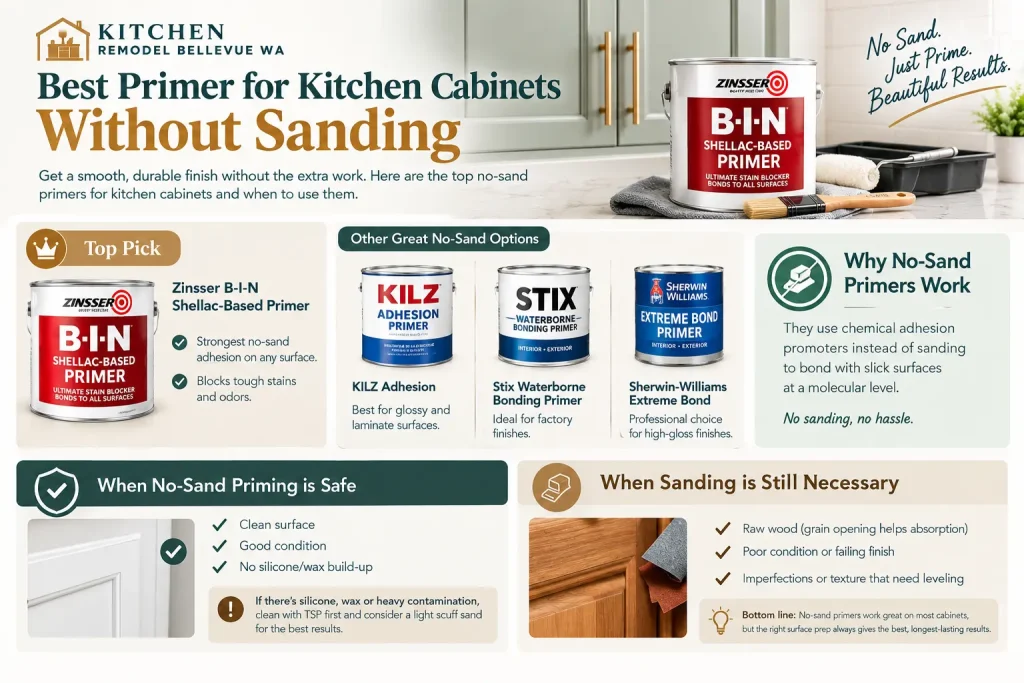
The best primer for painting kitchen cabinets without sanding is Zinsser B-I-N Shellac-Based Primer. It offers unique adhesion to glossy or slick surfaces and locks in tough stains without scuffing. The no-sand approach to cabinet priming is increasingly popular. It is a legitimate professional method rather than a shortcut.
Why No-Sand Primers Work
Bonding primers achieve adhesion through chemical rather than mechanical approaches. They include adhesion promoters that bond to slick surfaces at a molecular level. This eliminates the need for mechanical abrasion (sanding) to create a surface for the primer to grip. A high-quality bonding primer without sanding on surfaces in good condition with no contamination delivers adhesion comparable to a sanded surface.
Best No-Sand Primers for Kitchen Cabinets
Water-based bonding primers offer the best balance of performance, convenience, and safety for kitchen cabinets. No-sand primers are perfect for homeowners who want professional results without the sanding headache.
- Zinsser BIN: The strongest no-sand adhesion on any surface type.
- KILZ Adhesion: The best no-sand choice for glossy and laminate surfaces.
- Stix Waterborne Bonding Primer: An ideal no-sand option for factory finishes.
- Sherwin-Williams Extreme Bond: A professional no-sand primer for high-gloss finishes.
When No-Sand Priming is Safe
No-sand priming is safe on surfaces that are clean, in good condition, and not severely contaminated with silicone or wax. No-sand bonding primer will not achieve adequate adhesion when the surface has any silicone-based cabinet cream, wax polish, or contamination from cleaning products. You should clean painted kitchen cabinets with TSP first and consider a light scuff sand even when using a no-sand primer for the best results.
When Sanding is Still Necessary
Sanding is needed on raw wood where grain opening improves absorption and on cabinets where the existing finish is in poor condition or failing. It is also an ideal choice on surfaces with imperfections that require leveling or significant texture.
Water-Based vs Oil-Based Primer for Kitchen Cabinets
Choosing the oil-based vs water-based primer for kitchen cabinets is an important decision for priming. An oil-based primer is a superior option because it provides ideal adhesion for finished or glossy surfaces. A water-based primer provides lower odor and a quicker dry time.
Benefits of Oil-Based Primer
Let’s explore the advantages of using an oil-based primer for kitchen cabinets.
- Ideal penetration into wood grain for maximum adhesion on raw wood.
- Perfect stain blocking, especially for water and grease stains.
- Durable and very hard surface that accepts topcoats beautifully.
- Better performance in high-humidity conditions.
Drawbacks of Oil-Based Primer
Here are some disadvantages of using oil-based primer.
- 24-hour dry time between coats may double the project timeline.
- Need for mineral spirits for cleanup.
- Very high VOC content that includes a strong odor and a serious need for ventilation.
- May yellow over time, especially under white topcoats.
- Environmental regulations for disposal of oil-based and mineral spirit waste.
Advantages of Water-Based Primer
Let’s check out the benefits of water-based primer for kitchen cabinetry.
- 1 to 2-hour dry time, keeping the project on schedule.
- Water cleanup without the use of harsh chemicals.
- Low VOC that requires less ventilation for indoor application.
- No yellowing under topcoats.
- Compatible with water-based topcoats such as SW Emerald and Benjamin Moore Advance.
Disadvantages of Water-Based Primer
- Slightly lower stain-blocking capability than oil-based primer.
- Risk of raising on raw Medium Density Fibreboard (MDF).
- Less effective on contaminated or very glossy surfaces without a bonding formula
Recommendation of Best Primer for Kitchen Cabinets
Water-based bonding primers provide the best balance of convenience, performance, and safety for kitchen cabinets. A high-quality water-based bonding primer delivers exceptional results for most cabinet painting projects such as laminate, wood, and previously painted cabinets. You should consider an oil-based primer for raw wood cabinets where there is a need for deep penetration or for severe staining that water-based primer cannot block.
How to Apply Primer on Kitchen Cabinets: A Step-by-Step Guide
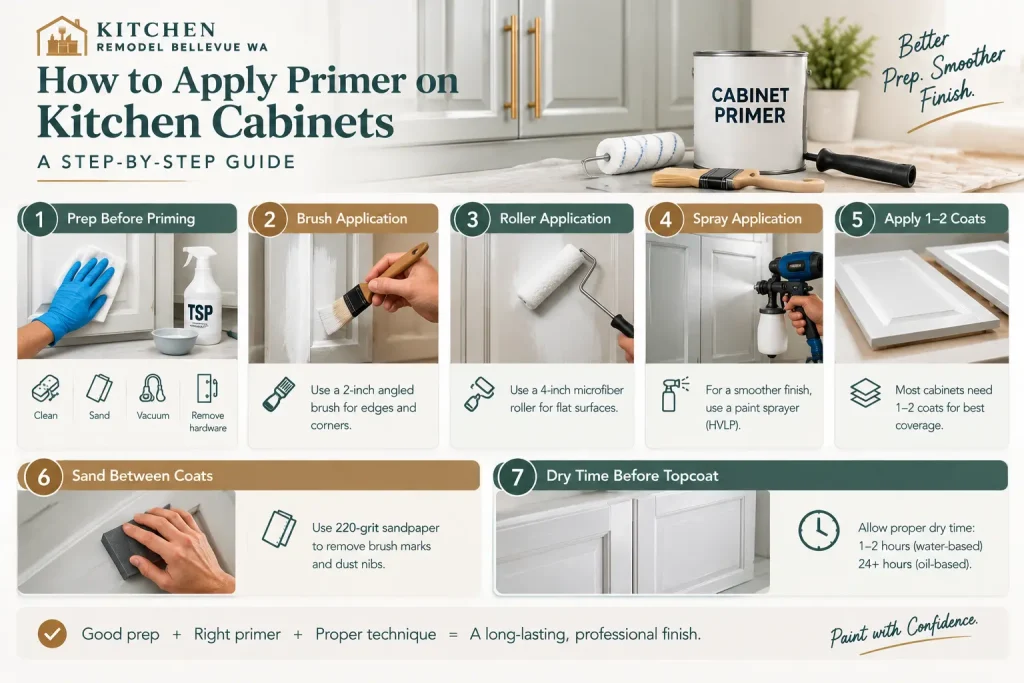
You should clean and scuff-sand all surfaces to apply the primer on kitchen cabinetry with a brush or a roller. Spray application is also a good option to use primer to make the cabinet surface smooth. It is good to sand between primer coats and consider dry time before the topcoat for a smooth application. Here is how you can use the best primer for kitchen cabinets.
Prep Before Priming
Primer may not compensate for inadequate surface preparation. Before applying any primer:
- Clean all surfaces with TSP or TSP substitute to remove contamination, silicone, and grease.
- Allow at least 2 hours to dry surfaces completely.
- Sand with 220-grit for laminate and veneer, 120-grit for standard surfaces.
- Vacuum all dust first and wipe with a tack cloth.
- Remove all hardware while labeling drawer fronts and doors.
Brush Application
You may use a 2-inch angled sash brush for frame areas, corners, and edges. It’s time to apply primer in even, thin strokes, following the grain on wood surfaces. You have to apply and leave; avoid overworking the primer and brushing back over areas that are starting to dry.
Roller Application
You should use a 4-inch microfiber roller for flat door and drawer front surfaces. It’s always better to roll in one direction in even, thin coats. Instant “tip-off” that includes using a dry brush lightly over the rolled surface in one direction to reduce roller texture and ensure a uniform, smooth coat.
Spray Application
Spraying primer creates a more professional, smoother finish than brushing. You can use a paint sprayer with a cabinet-grade primer to apply thin, even coats to avoid drips. HVLP spraying produces the most uniform primer coat and is the professional standard for drawer fronts and doors. Thin the primer per the sprayer manufacturer’s guidelines, strain before spraying, and apply in two thin passes rather than one heavy pass.
Apply 1-2 Coats
Most cabinets require 1 to 2 coats of primer. You may apply two coats for better durability and coverage if you are covering strong wood grain like oak, stained wood, or dark cabinets. It’s important to let the first coat dry fully and sand lightly before applying the second coat.
Sanding Between Primer Coats
It’s good to sand between primer coats with 220-grit sandpaper to remove brush marks, raised grain, and dust nibs. This approach allows you to produce a progressively smoother surface with each coat. You may use a tack cloth to wipe after sanding before applying the next coat.
Dry Time Before Topcoat
It is necessary to allow primer to reach its full recommended dry time before applying topcoat. Applying topcoat too early when the primer is still partially wet may trap moisture and cause adhesion failure. Full dry time is often 1 to 2 hours for water-based primers and at least 24 hours for oil-based primers.
Want a Factory-Smooth Finish Without the DIY Work?
Our licensed team removes every door, primes every surface with the right product, and spray-applies topcoat in a controlled environment to produce a finish that lasts 8 to 10 years.
500+ Bellevue kitchens completed. Get professional help today.
Get My Cabinet Quote (425) 696-7060Best Paint to Use After Priming Kitchen Cabinets
It is important to consider primer paint for kitchen cabinets. Primer and topcoat work as a system to deliver the best results from a compatible primer-to-topcoat pairing. Let’s explore the best paints to use after priming kitchen cabinets. You need to consider the paint when you know the best primer for kitchen cabinets.
Benjamin Moore Advance
Benjamin Moore Fresh Start or Insl-X Stix primer pairs directly with Benjamin Moore Advance topcoat for the most reliable DIY cabinet painting system. Advance is a water-based alkyd that self-levels well, dries to a hard enamel finish, and is the professional standard for brush and roller application.
Sherwin-Williams Emerald Urethane
Sherwin-Williams Extreme Bond or ProBlock primer pairs with Emerald Urethane topcoat for a durable, hard-wearing cabinet finish. Emerald Urethane dries faster than Advance and offers excellent scrubbability, becoming a strong choice for high-use kitchens.
You can see our complete guide on how to paint kitchen cabinets for the full process of applying topcoat after priming.
7 Common Primer Mistakes on Kitchen Cabinets
Using the wrong type of primer or skipping it completely may cause the paint on the kitchen cabinetry to peel, chip, and bleed stains over time. Skipping cleaning first and ignoring wood tannin are also common mistakes when you consider primer for kitchen cabinets.
- Skipping Primer Entirely: Paint on kitchen cabinets is inadequate without primer, and peeling starts at high-contact areas within months of project completion.
- Using Wall Primer: Unable to provide adhesion or stain-blocking capability required for kitchen cabinet surfaces compared to a dedicated bonding or cabinet primer.
- Using Paint and Primer in One: Paint and primer in one product are not ideal for kitchen cabinets because you need a dedicated primer for proper adhesion.
- Applying Too Thick: Thick primer coats sag and take a long time to dry and do not provide better coverage than two thin coats.
- Not Allowing Full Dry Time: Applying topcoat before primer has fully dried may trap moisture and cause adhesion failure between layers.
- Wrong Primer for the Surface: Using a standard water-based primer on laminate or highly glossy factory finishes results in adhesion failure.
- Not Sanding Between Primer and Topcoat: Skipping light sanding with 220-grit between the final primer coat and the first topcoat may result in visible texture.
Ready for Cabinets Primed and Painted the Right Way in Bellevue?
The right primer is the foundation of a cabinet paint job that lasts. Kitchen Remodel Bellevue WA selects and applies the correct primer system for your specific cabinet material.
Choose the Best Primer for Kitchen Cabinets Today
The right primer is the foundation for a durable cabinet job. Choosing the best primer for kitchen cabinets saves both time and money. At Kitchen Remodel Bellevue WA, we provide professional cabinet painting and cabinet customization services across Bellevue and the full Eastside. Contact us today when you are looking for a professional primer and paint application without managing the product selection, prep work, and multi-day timeline.
Answers to Common Questions About Best Primers for Kitchen Cabinets
Frequently asked questions about the primer for kitchen cabinets are answered here.
What kind of primer do you use on kitchen cabinets?
You should use a shellac-based or high-adhesion primer on kitchen cabinets to ensure the ideal grip of paint on the slick surfaces while blocking the grease, smoke, and tannin stains.
Do I need a primer before painting kitchen cabinets?
Yes, you usually need a primer for kitchen cabinets before painting them to ensure proper adhesion, stain-blocking, and a smooth and durable finish.
How many coats of primer on cabinets?
You may require one solid coat of primer on factory finishes or previously painted cabinets with matching. You can consider two coats for bare wood, dark colors, and bleeding or porous materials.
How should the primer look on cabinets?
A properly primed cabinet may look opaque, matte, and uniformly covered without any heavy brush marks, drips, or bare wood showing through in the kitchen.
Should I sand cabinets after priming before painting?
Yes, you should lightly sand your kitchen cabinets after priming to ensure a professional, smooth finish. Sanding removes imperfections and improves adhesion.
What is the best primer for kitchen cabinets?
The best primer for kitchen cabinets is Zinsser B-I-N Shellac-Based Primer, which provides exceptional stain-blocking while sticking to glossy surfaces with little to no sanding.
One Response